A contact lens manufacturer does more than turn raw polymer into a finished lens. It may develop lens designs, select materials, produce lenses through controlled processes, and package them for distribution. Behind the clear surface are precise curves, measured dimensions, and quality checks. That matters. Small differences can affect fit, comfort, and optical performance. Manufacturing also involves sterilization, labeling, and traceability, though the exact requirements depend on the product and market.
Choosing a manufacturer means looking beyond a polished website or a low quoted price. Consider its experience with the lens type you need, its production capacity, and how clearly it explains quality controls. Ask what testing and documentation it can provide, how product batches are tracked, and how it handles changes or defects. Details count. If possible, review samples and discuss specifications with qualified eye-care or technical professionals. A supplier’s answers should be specific, consistent, and supported by relevant records—not just confident promises.
There is no universal checklist that guarantees a perfect partnership. A large factory may suit high-volume orders, while a smaller operation may offer closer communication; neither is automatically better. Be candid about your own needs, including timelines, target markets, and support after production. Also verify applicable requirements independently, since standards can vary by location. This guide explores what manufacturers do and which practical questions can help you assess their capabilities. The goal is not to find the cheapest option, but a reliable partner whose processes fit the product and the people who will use it.
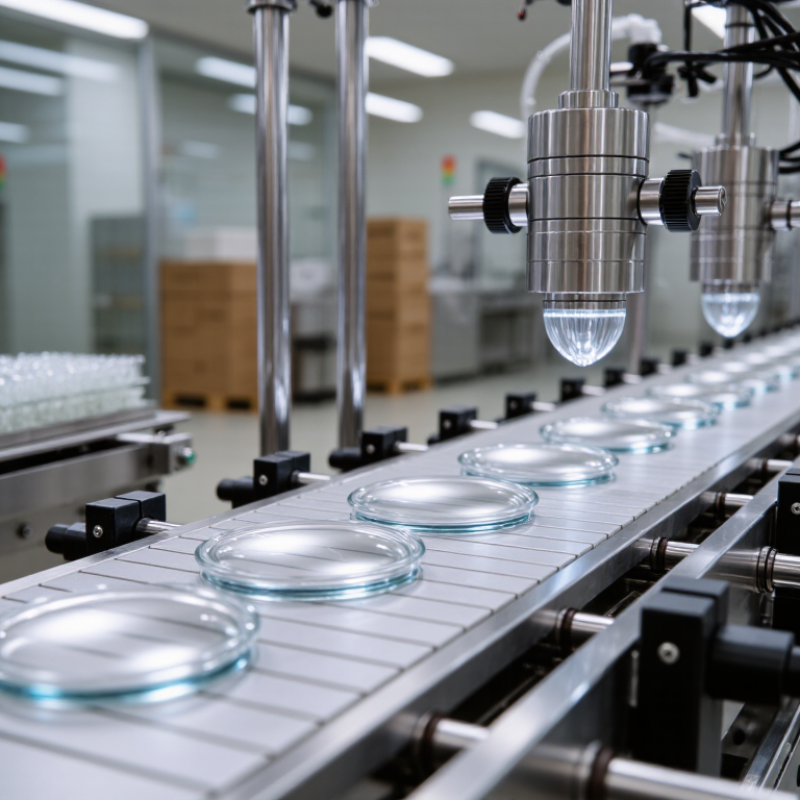
What a Contact Lens Manufacturer Does: From Lens Design to Packaging
A contact lens manufacturer turns an optical design into a lens that can be produced consistently. Designers specify power, base curve, diameter, material, and edge shape. They assess how the lens centers, moves, and holds moisture on the eye. Prototypes are measured and checked for optical quality before production begins. Small tolerances matter. A slight variation in curvature can affect fit and comfort. Manufacturing may use precision molding or other methods suited to the lens material. The ISO 18369 series provides terminology and measurement methods for contact lenses, supporting consistent product evaluation.
Quality checks continue after lens formation. Teams inspect dimensions, optical power, surface condition, and packaging seals. Lenses are placed in suitable solution and sealed in individual sterile packages; sterilization methods depend on product design. Labels must clearly state key handling and replacement information. Packaging is part of care. The CDC’s 2014 MMWR report estimated that 45 million people in the United States wear contact lenses. It also found that nearly all surveyed wearers reported at least one risky lens-care behavior. Clear instructions therefore matter, though a label cannot replace good habits. Manufacturers also keep batch records so issues can be traced to specific production runs. A useful question for buyers is how the supplier verifies each batch, not just how polished its sample lenses look.
Hydrogel vs. Silicone Hydrogel: Comparing Oxygen Transmissibility (Dk/t)
Hydrogel and silicone hydrogel lenses differ in how oxygen reaches the cornea. Dk describes a material’s oxygen permeability; t represents lens thickness. Dk/t combines these factors, so a thinner lens or more permeable material can allow greater oxygen transmissibility. Higher is not automatically better for every wearer.
Traditional hydrogel lenses rely partly on water content to carry oxygen. Their performance can change as the lens dehydrates during wear. Silicone hydrogel materials generally transmit more oxygen, even at lower water content. That can matter during longer daily wear, but comfort also depends on fit, surface properties, lens movement, and the wearer’s eyes. Small details count.
When evaluating a manufacturer, ask for verified Dk/t data for the finished lens, not just a material’s Dk value. Thickness varies across a lens, so the measurement method and test conditions matter. Request documentation on quality controls and consistency between production batches. I still find Dk/t easy to oversimplify. A high figure cannot confirm that a lens fits well or feels comfortable. Compare technical data with professional fitting and follow the prescribed wearing schedule; never extend wear based on oxygen claims alone.
Hydrogel vs. Silicone Hydrogel: Oxygen Transmissibility (Dk/t)
Approximate representative ranges for soft contact lenses
Dk/t measures oxygen transmissibility through a lens; higher values indicate more oxygen can pass through. These approximate ranges are not universal: Dk/t varies with lens material and thickness, so compare the specifications of individual lenses.
U.S. FDA Class II and Class III Pathways for Prescription Contact Lenses
A prescription does not determine a contact lens’s FDA class by itself. Classification depends on the lens design, materials, wear schedule, and intended use. Many prescription lenses follow the Class II 510(k) pathway. The manufacturer must show that the device is substantially equivalent to a legally marketed device. Some higher-risk lens types or indications may require Class III Premarket Approval, which calls for stronger evidence of safety and effectiveness. Details matter.
When assessing a manufacturer, ask which FDA pathway applies to the exact lens you plan to source. Request the relevant 510(k) clearance or PMA information, and check that its intended use matches the product’s labeling. A clearance for one lens design does not automatically cover another. Check, too, how the manufacturer controls production, verifies lens dimensions and optical power, and tracks lots. Look for clear records of quality checks and a process for handling complaints.
Be specific. Ask how prescriptions are verified, how changes are documented, and what happens when a batch fails inspection. Confirm that labeling explains approved wear and care instructions. FDA status is important, but it is not a substitute for careful supplier review. Regulatory pathways can be easy to misread; verify the product’s classification and current status in FDA records, especially when claims or wear schedules differ.
How ISO 13485:2016 and the ISO 18369 Series Guide Lens Quality
A contact lens manufacturer needs more than precise molding equipment. ISO 13485:2016 sets requirements for a quality management system used in medical-device production. It covers documented processes, risk management, supplier controls, and corrective actions. In practice, these controls should connect a lens batch to its materials, production records, and inspection results. Ask whether the certificate’s scope includes the specific lens types and activities you need. A certificate alone is not proof of consistent performance. Details matter.
The ISO 18369 series focuses specifically on contact lenses. Its parts define terminology and address lens dimensions, properties, tolerances, and measurement methods. These shared methods help buyers compare test results and check whether a manufacturer’s specifications are meaningful. Ask how the factory measures parameters such as base curve and diameter, and how often equipment is verified. Request sample test records and batch traceability documents, not only a polished presentation. Paperwork can look tidy while routine records are uneven, so examine actual examples. Still, standards cannot replace clear communication about intended wear, packaging, and quality expectations. A useful supplier should explain its limits as plainly as its capabilities.
How to Choose a Manufacturer: Verify Regulatory Status, Testing, and Traceability
Choosing a contact lens manufacturer starts with evidence, not polished promises. Ask which regulatory authority oversees the facility and product in each intended market. Request current registration or authorization records, then confirm them through the relevant official database where available. Names, product categories, and addresses should match. A certificate alone may not prove that every lens model is covered.
Review testing protocols for sterility, biocompatibility, optical power, water content, and packaging integrity, as relevant to the lens type. Ask who performs each test, which methods are used, and how often samples are checked. Independent laboratory reports can add confidence, but only when their scope matches the product and production site. Read dates and sample identifiers carefully. Small details matter.
Traceability should connect a finished lens box to its production lot, materials, inspection records, and release decision. Request a sample lot history and ask how quickly the manufacturer can locate affected units during a quality investigation. Check complaint handling, corrective actions, and record-retention practices. If answers are vague, pause and ask for documents. I would not treat a tidy audit folder as proof of consistent production; follow-up checks and clear records matter more. A site visit can reveal practical habits, though it cannot replace independent verification.
FAQS
It turns an optical design into lenses made consistently. Designs specify power, base curve, diameter, material, and edge shape.
A slight curvature change can affect fit and comfort. Small tolerances matter.
Teams inspect dimensions, optical power, and surface condition. They also check package seals and keep batch records.
Ask how each batch is verified and whether records can trace a specific production run. A polished sample alone tells little.
Dk describes oxygen permeability, while t represents lens thickness. Together, they indicate oxygen transmissibility.
No. Fit, lens movement, surface properties, and eye differences also matter. I find this easy to oversimplify.
Hydrogel lenses rely partly on water to carry oxygen, and performance can change as they dehydrate. Silicone hydrogel generally transmits more oxygen, even with lower water content.
Request verified data for the finished lens, plus the test method and conditions. Thickness can vary across one lens.
Lenses are sealed individually in suitable solution, with sterilization depending on product design. Clear handling and replacement instructions matter. A label cannot replace good habits.
Conclusion
A contact lens manufacturer manages the process of turning a lens concept into a finished product, including design, material selection, molding, inspection, sterilization, and packaging. Material choice affects performance: hydrogel and silicone hydrogel lenses differ in oxygen transmissibility, commonly expressed as Dk/t, as well as in other wear characteristics. Prescription lenses also require an appropriate U.S. FDA regulatory pathway, with classification and review requirements depending on the product.
Quality and consistency are supported by standards such as ISO 13485:2016 for medical-device quality management and the ISO 18369 series for contact-lens terminology, measurements, and related requirements. When choosing a manufacturer, assess its regulatory status, testing procedures, production controls, and ability to trace materials and product batches. Clear documentation and reliable oversight help buyers evaluate whether a manufacturer can produce lenses that meet defined quality and safety expectations.