Colored contact lenses combine vision care with personal style, so choosing a supplier requires more than comparing colors. China has a large manufacturing base, but capabilities and consistency vary between companies. A reliable colored contact lens manufacturer should clearly explain its lens materials, production controls, packaging options, and quality checks. Request current product specifications and sample lenses. Inspect the printed box, lens tint, and edge finish. Small details matter.
This guide introduces notable Chinese manufacturers and practical factors buyers can use to assess them. It considers product range, manufacturing experience, quality-management practices, customization, and communication. Company claims should be checked against current documents, facility information, and sample performance. A polished website is not proof of dependable production. Neither is a long catalog. Confidence comes from clear answers and repeatable results. Still, no supplier is perfect; lead times, minimum order quantities, and available designs may change. Buyers should confirm applicable product requirements in their own markets before placing orders. The goal is not to promise a flawless partner. It is to make comparison more informed, grounded, and useful.
Colored contact lenses change eye appearance through tinted materials and printed patterns. Some also correct vision; others have no prescription power. Either way, appearance is only one part of the choice. Fit still matters.
Enhancement-tint lenses subtly deepen a wearer’s natural iris color, often leaving the pupil area clear. Opaque designs cover more of the iris and can create a noticeable change, including on darker eyes. Circle or limbal-ring styles add a darker outer edge for a more defined look. These effects vary with natural eye color, lighting, and lens design. A sample image may not show the exact result.
Lenses also differ by material, replacement schedule, and prescription options. These details matter more than a product photo suggests. A qualified eye-care professional can check fit and discuss suitable wearing and care instructions. Do not share lenses, and stop wearing them if your eyes become painful or unusually red. The categories can overlap, so labels alone may not explain how a lens will look or feel on an individual eye.
China’s colored contact lens manufacturing industry combines optical engineering, materials science, and appearance-led consumer demand. Growth depends on more than color choices. It requires repeatable molding, consistent pigment placement, smooth edges, and stable hydration across production batches.
Grand View Research estimated the global colored contact lens market at USD 3.8 billion in 2023, with a projected 5.3% compound annual growth rate from 2024 to 2030. This is a global benchmark, not a China-specific sales figure. For Chinese manufacturers, it points to a market where design updates must coexist with process control. A lens may look vivid under studio lighting yet feel dry after several hours. Cosmetic appeal alone is a weak quality test. China’s National Medical Products Administration classifies contact lenses as Class III medical devices, making registration and quality systems central to manufacturing. Pigment distribution, base-curve consistency, packaging seals, and batch records all matter.
Manufacturers face a practical tension. Frequent color launches encourage variety, while validated production takes time. That tension is easy to underestimate. Market forecasts rarely disclose factory defect rates or actual capacity use. Buyers should examine documented testing, traceability, and batch consistency, rather than judging production capability from sample images alone.
| Industry Dimension | Verified Industry Information | Manufacturing Relevance |
|---|---|---|
| Regulatory classification | Contact lenses, including colored contact lenses, are regulated as Class III medical devices in China. | Manufacturers must meet the applicable medical-device registration and quality-management requirements before placing products on the Chinese market. |
| Product registration | Class III medical devices require registration under China’s medical-device regulatory framework. | Product documentation and evidence must address the registered product’s intended use, materials, performance, safety, and manufacturing controls. |
| Manufacturing controls | Medical-device production is subject to applicable manufacturing licensing and quality-management oversight in China. | Controlled production records, staff training, equipment maintenance, and documented inspection procedures support product consistency and traceability. |
| Lens materials | Soft contact lenses are made from hydrogel or silicone hydrogel materials; material choice varies by product design. | Material properties influence hydration, oxygen transmission, dimensional stability, and the tests required for the finished lens. |
| Lens-forming processes | Contact lenses can be produced using processes such as cast molding, lathe cutting, or spin casting. | The selected process affects tooling, production workflow, dimensional control, and the inspection plan. |
| Color and pattern design | Colored lenses incorporate a patterned color element into the lens design. Printing and layered or encapsulated pigment approaches are used in the wider industry. | Color uniformity, pattern positioning, lens transparency, and pigment containment are important design and quality considerations. |
| Quality testing | Contact-lens quality evaluation can include checks of dimensions, optical power, surface condition, and relevant material or biological safety characteristics. | Testing methods and acceptance criteria should be appropriate to the registered product and applicable standards. |
| Sterility and packaging | Contact lenses supplied as sterile products require validated sterilization and packaging controls appropriate to the product. | Manufacturers control the sterilization process, package integrity, and relevant shelf-life conditions. |
| Labeling and instructions | Medical-device labeling and instructions must comply with applicable requirements in the market where the product is sold. | Packaging information should align with the product registration and clearly communicate intended use, wearing guidance, and applicable precautions. |
| Export requirements | Exported contact lenses must meet the regulatory requirements of each destination market; Chinese authorization alone does not replace local approvals. | Export planning may involve market-specific registration, labeling, technical documentation, and conformity assessment. |
| Industry data availability | Publicly available regulatory information does not, by itself, establish a complete or current count of active manufacturers, production capacity, or market share. | Company rankings and capacity comparisons should be based on dated, verifiable sources rather than inferred from product listings or registration records alone. |
Evaluating a colored contact lens manufacturer starts with evidence, not polished product photos. Ask for current quality-system documents, product specifications, and test records relevant to your target market. Requirements differ by country, so confirm details with a qualified regulatory professional. Check whether the manufacturer can trace a production lot from raw materials to finished lenses. Clear records matter.
Then examine the lenses themselves. Request samples from more than one production lot, if possible. Compare color, edge finish, packaging, and printed specifications under consistent lighting. Ask how the manufacturer monitors lens dimensions, oxygen transmission, and microbial cleanliness. Look for answers supported by documented procedures, not broad promises. A sample can feel comfortable once and still reveal little about long-term consistency. That is an easy detail to overlook.
Communication is part of the evaluation. Send a specific question about a defect or delayed shipment and note how clearly the team responds. Ask about change control, complaint handling, and batch records. If answers arrive quickly but lack evidence, pause. I would not treat a factory visit or attractive sample as proof of dependable quality; both offer only a partial view. Compare claims with records, and note any gaps before making a purchasing decision.
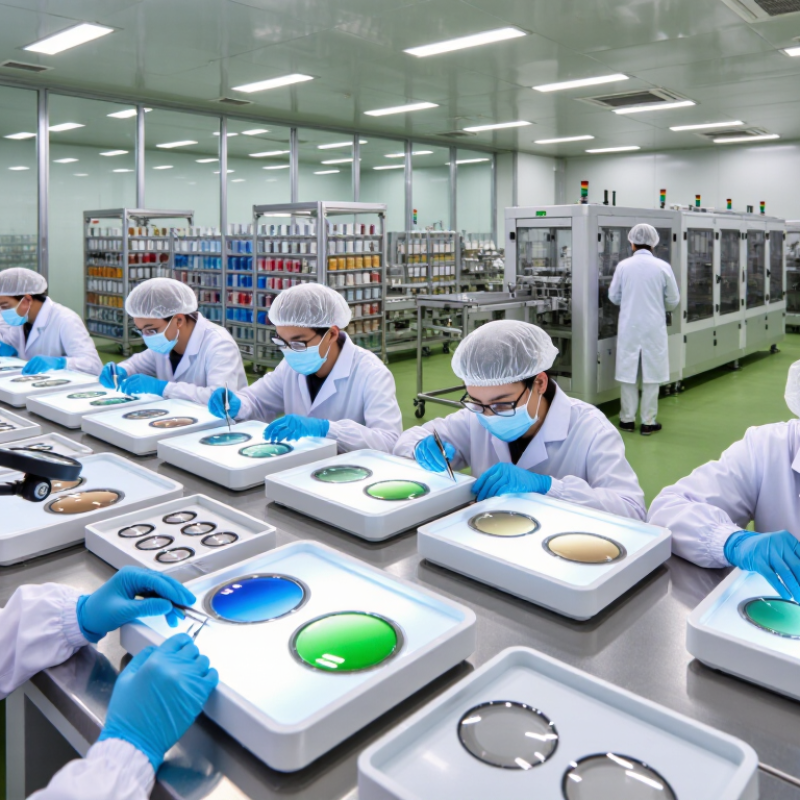
China’s colored contact lens manufacturers vary in scale, production focus, and technical documentation. Some specialize in high-volume manufacturing, using automated molding lines and inspection stations to maintain consistent lens dimensions. Others offer smaller production runs, with more flexibility in color patterns and packaging. Details matter. A clear profile should explain materials, manufacturing controls, and how finished lenses are checked.
Manufacturers with stronger technical profiles describe parameters such as water content, oxygen permeability, and lens replacement schedules. They may also provide traceability information, helping buyers connect production batches with inspection records. Look for specific documentation, not broad claims. A factory photograph alone tells little about quality. I would also ask how color pigments are contained within the lens structure and what testing supports that explanation.
Some suppliers focus on export coordination and customized designs, while others emphasize stable, repeatable production. Their capabilities can differ, even within the same region. That is easy to overlook. Buyers should compare sample consistency, response times, and technical records before making decisions. Colored lenses still require appropriate professional fitting; attractive packaging cannot confirm that a lens suits an individual eye.
Colored contact lenses are medical devices, even when worn only for appearance. In China, contact lenses fall under Class III medical device controls, so manufacturers need product registration and documented quality systems. A factory audit should examine more than clean floors. Review batch records, sterilization validation, material biocompatibility, lens dimensions, oxygen permeability, and packaging integrity. ISO 18369 provides a technical framework for contact lens terminology, measurements, and testing. Clear records matter.
Small defects matter.
Quality checks should cover color stability and pigment placement, too. The color layer must not obscure the wearer’s vision or compromise the lens surface. Buyers can request test reports tied to the exact model and production batch, rather than relying on generic certificates. The CDC’s 2015 MMWR report on 1,000 contact lens wearers found that 99% reported at least one risky wear or care practice. That finding is not evidence of factory failure; it shows why accurate instructions and traceable products are essential. A test sheet still cannot guarantee every lens will be comfortable in every eye. That limit deserves honest discussion.
Colored contact lenses are regulated as Class III medical devices in China. This chart summarizes three applicable regulatory facts; 1 means the requirement or classification applies.
Sources: China’s Medical Device Classification Catalogue and Regulations on the Supervision and Administration of Medical Devices (State Council Order No. 739). Requirements may vary by product and business activity; consult current NMPA rules for specific cases.
Enhancement tints deepen natural iris color, often leaving the pupil area clear. Opaque designs cover more of the iris. Circle styles add a darker outer edge.
Not always. Natural eye color, lighting, and lens design affect the result. A sample can mislead.
Check the material, replacement schedule, and prescription options. Ask an eye-care professional to assess fit and suitable care instructions.
Request current quality-system documents, product specifications, and relevant test records. Confirm requirements for your target market with a qualified regulatory professional.
Traceability can connect raw materials, finished lenses, and inspection records. Ask for clear batch documentation. Details matter.
Compare samples from different production lots, when possible. Under consistent lighting, inspect color, edge finish, packaging, and printed specifications.
Ask about lens dimensions, oxygen transmission, water content, pigment containment, and cleanliness checks. Look for documented procedures, not broad promises.
No. A visit or attractive sample offers only a partial view. I might be overcautious, but records matter more.
Ask about a defect or delayed shipment. Note whether the reply is clear and supported by evidence. Fast answers alone are not enough.
Colored contact lenses are available in a range of designs, from subtle shades that enhance natural eye color to more noticeable styles. Understanding their materials, appearance, comfort, and intended use helps buyers compare options and identify products suited to different preferences. China’s manufacturing sector includes companies with varied production capabilities, product ranges, and levels of specialization.
When evaluating a colored contact lens manufacturer, consider manufacturing experience, material selection, quality-control procedures, product documentation, and the clarity of its communication. Profiles of notable manufacturers can help illustrate differences in production scale and expertise without relying on brand claims alone. Quality standards and applicable regulations are also important: responsible manufacturers should maintain consistent testing, traceability, and clear guidance for safe product use. Together, these factors provide a practical framework for assessing suppliers and making informed comparisons.