Featured OEM Optical Lines & Private Label Packaging
Engineered for medical device compliance, cosmetic appeal, and high-velocity supply chain distribution across Europe, the Americas, and APAC corridors.
Navigating the Korea-Connected CE Certified Medical Device Matrix
The global sourcing landscape for aesthetic and corrective soft contact lenses is experiencing a structural paradigm shift. International optical procurement professionals, hospital group purchasers, and cross-border beauty conglomerates demand more than high cosmetic resolution; they require undeniable clinical safety, documented trace compliance, and strict adherence to the European Medical Device Regulation (EU MDR 2017/745) Class IIa and Class IIb thresholds.
As a seasoned manufacturing hub rooted in technical engineering excellence, our manufacturing operations operate in tandem with the rigorous optical design traditions championed by Korean exporters while maintaining factory-direct volume scaling in our cleanroom facilities. Whether catering to domestic Korean distributors or international importers routing goods through Incheon, Busan, Shenzhen, and Hong Kong, our integrated facilities eliminate middleman inefficiencies.
- Medical CE Marking & ISO 13485:2016: Full Technical Documentation File (TDF) validation, bio-compatibility assays according to ISO 10993, and regular audits by European Notified Bodies.
- Sandwich Micro-Pigment Encapsulation: Pigment locked completely within hydrogel matrices, ensuring zero mechanical friction against the corneal endothelium or palpebral conjunctiva.
- Automated Full-Mold Cast Polymeric Lines: Nanometer-scale optical tooling that eliminates edge irregularities, reducing foreign-body sensation and enhancing wettability.
Technical Lens Parameter Standards
Our standard and customized private-label production matrices comply strictly with globally unified ophthalmic dimensional tolerances:
All batch releases require 100% spectrophotometric optical clarity checks, diopter power mapping, and saline pH stability testing (pH 7.2 ± 0.2).
Comparative Polymer Systems: PolyHEMA vs. Silicone Hydrogel
Understanding oxygen transmissibility (Dk/t), modulus flexibility, and moisture retention profiles is fundamental to strategic procurement in Western, Korean, and pan-Asian markets.
| Polymer Formulation Type | Water Content (%) | Oxygen Permeability (Dk/t) | Elastic Modulus (MPa) | Corneal Health Suitability | Target Replacement Cycle | Regulatory Status |
|---|---|---|---|---|---|---|
| Standard Hydrogel (2-HEMA + MAA) | 38% – 42% | 18 – 24 × 10-9 | 0.35 – 0.42 | Daily Cosmetic / 8hr Wear | Monthly / Quarterly / Yearly | CE / ISO / GMP |
| High-Moisture Hydrogel (Galyfilcon Base) | 55% – 58% | 28 – 33 × 10-9 | 0.45 – 0.52 | Extended Day Comfort | Daily Disposable (1-Day) | CE Approved |
| Advanced Silicone Hydrogel (SiHy) | 45% – 48% | 110 – 138 × 10-9 | 0.65 – 0.78 | High-Dk/t Continuous Oxygen | 1-Day / Bi-Weekly Wear | CE / MDR Ready |
| Color Cosmetic Sandwich SiHy | 42% – 46% | 85 – 105 × 10-9 | 0.58 – 0.68 | Safe Iris Chromatic Expression | Monthly Replacement | Validated TDF |
*Note for procurement auditors: The oxygen transmissibility of cosmetic lenses is structurally altered by the thickness of internal color print layers. Our proprietary micro-dot sandwich printing method utilizes micronized cosmetic pigments suspended in hydrogel-compatible binders, maintaining an unimpeded Dk/t flux across 92% of the clear optical zone. This eliminates hypoxic corneal swelling risk, positioning our factory as the partner of choice for Korean and European brands demanding medical-grade excellence.
Future Procurement & Product Development Trends (2025–2030)
Anticipate regulatory tightening, demographic preferences, and manufacturing disruptions to maximize supply chain margins.
1. Hyper-Transition to Daily Disposables
Historically, Korean and Asian exporters dominated the annual (yearly replacement) vial sector. However, global market data indicates a compound annual growth rate (CAGR) exceeding 8.4% for 1-Day daily disposable blister packs. Institutional buyers and boutique beauty brands are phasing out extended-wear lenses to mitigate microbial keratitis liability. Our factory has expanded automated daily-blister production to 12 million units monthly to support this market migration.
2. Optical Bio-Shielding & Blue-Light Filtering
Next-generation cosmetic and corrective contact lenses increasingly integrate functional UV400 and High-Energy Visible (HEV) blue-violet radiation absorbers into the monomer mix. Sourcing agents in tech-dense markets (e.g., South Korea, Japan, Northern Europe) now mandate dual-action lenses that balance cosmetic enhancement with ocular photoprotection, offering significant brand differentiation and premium retail pricing.
3. Integrated Eye-Beauty Packaging Systems
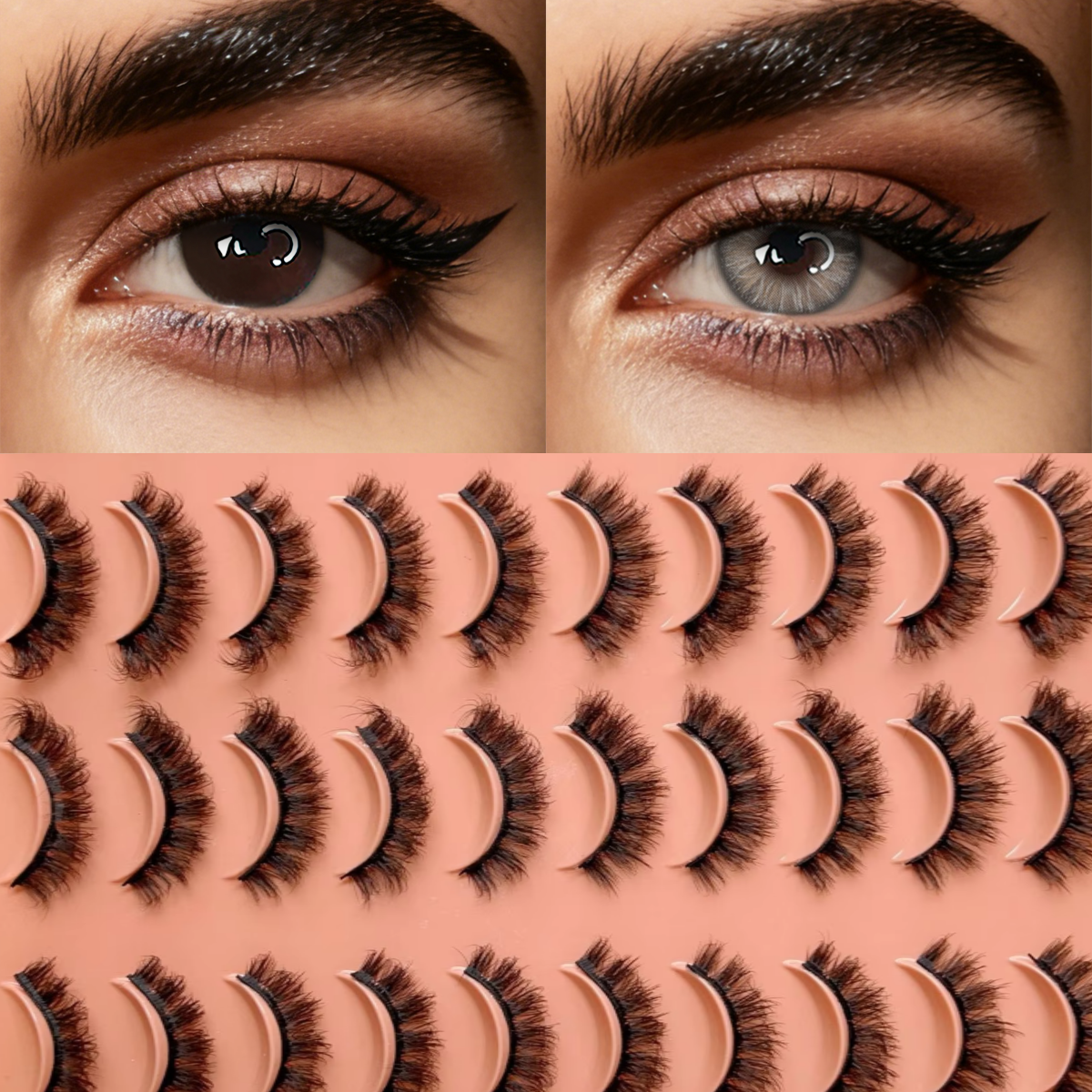
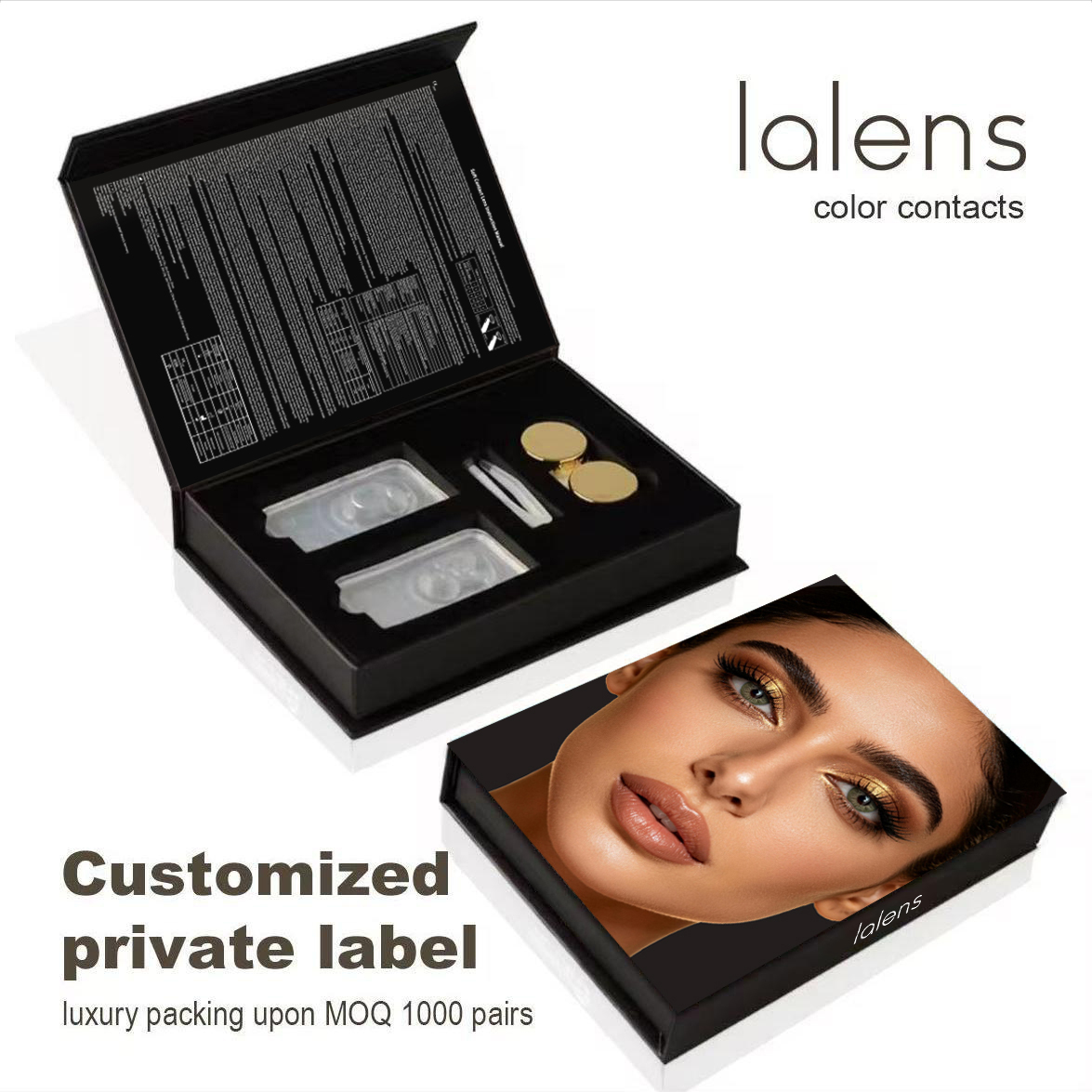
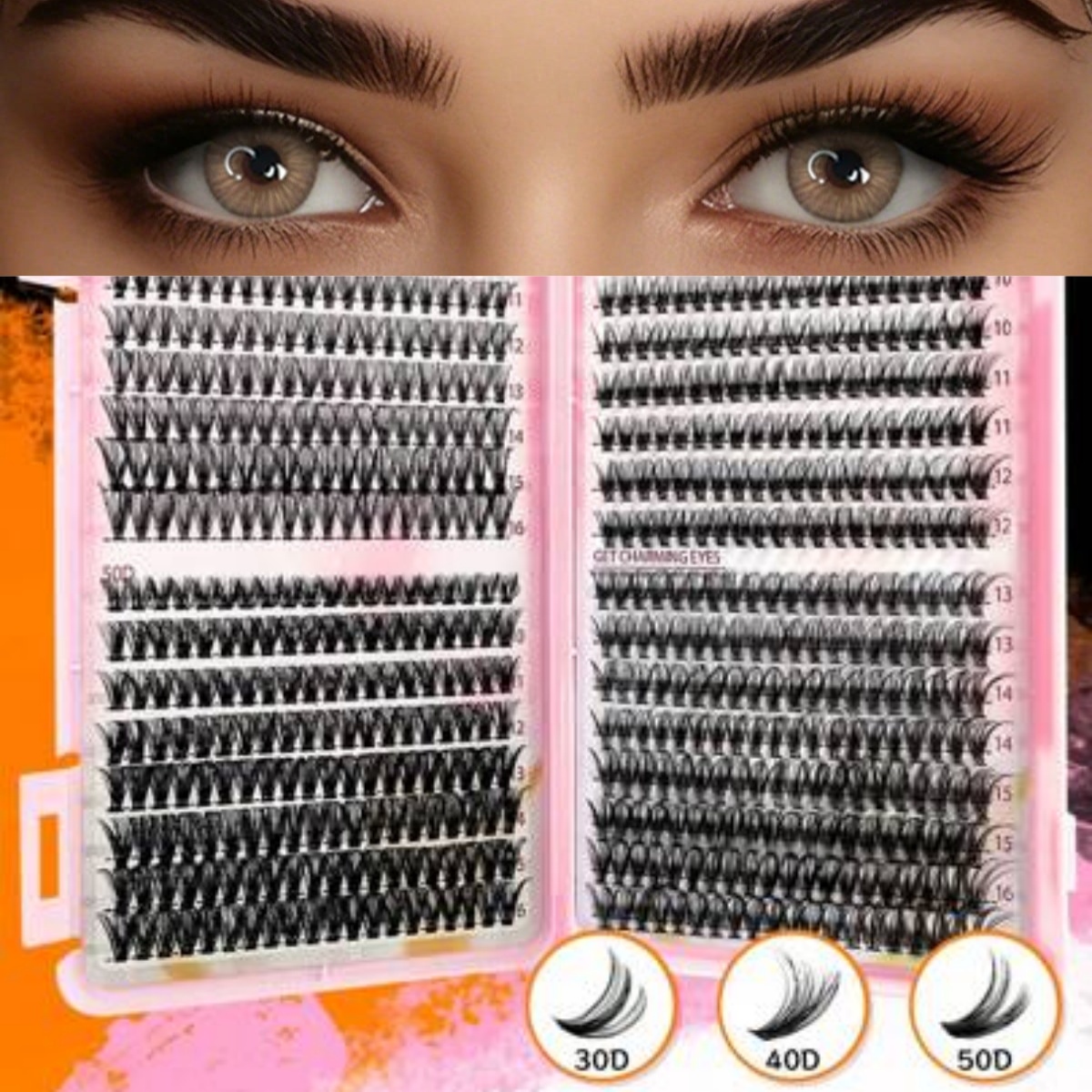
Modern brand growth no longer occurs in isolation. Beauty retailers are actively cross-merchandising soft contact lenses with high-end faux mink eyelashes, magnetic lash kits, and custom rigid box presentation packaging. Sourcing all secondary packaging, rigid paperboard master cases, and complementary eye cosmetics from a unified manufacturing partner reduces customs clearance costs, harmonizes batch numbering, and guarantees aesthetic packaging alignment.
Enterprise Strengths & Factory Capabilities
Why Tier-1 importers, pharmaceutical brands, and multi-channel retailers consolidate contract manufacturing with Shenzhen Lalens Co., Ltd.
16 Years of Unbroken Manufacturing Stability
Established with an unrelenting focus on optical stability, our 16-year operational history provides unparalleled risk mitigation. We have perfected the art of cast-molding repeatability, eliminating lot-to-lot color drift, diopter variance, and base curve deformities.
Certified Class 100,000 Cleanroom GMP Infrastructure
Every phase of hydration, automated blister insertion, micro-meter saline filling, and terminal steam sterilization occurs within environmental chambers governed by continuous particle, humidity, and temperature monitoring systems compliant with ISO 14644-1 standards.
Full Regulatory Dossier & TDF Readiness
We do not simply export lenses; we provide the entire regulatory apparatus required for local registration. From US FDA 510(k) submission frameworks and CE Class IIb Technical Documentation Files to Certificate of Free Sale (CFS) and Korea MFDS-aligned documentation, your market entry is fast-tracked.
Frequently Asked Questions for Contact Lens Importers
Transparent answers to technical, regulatory, and logistics queries encountered by international distributors and brand managers.
Our manufacturing lines are certified under the Medical Device Directive and ISO 13485:2016 quality management systems. In South Korea, contact lenses are classified as Class II or Class III medical devices regulated by the Ministry of Food and Drug Safety (MFDS). Because our sterilization validation (ISO 11137/ISO 17665) and biocompatibility reports (ISO 10993) align with International Medical Device Regulators Forum (IMDRF) standards, our technical documentation transfers smoothly for Korean importers seeking MFDS import approvals or cross-exporting to European CE jurisdictions.
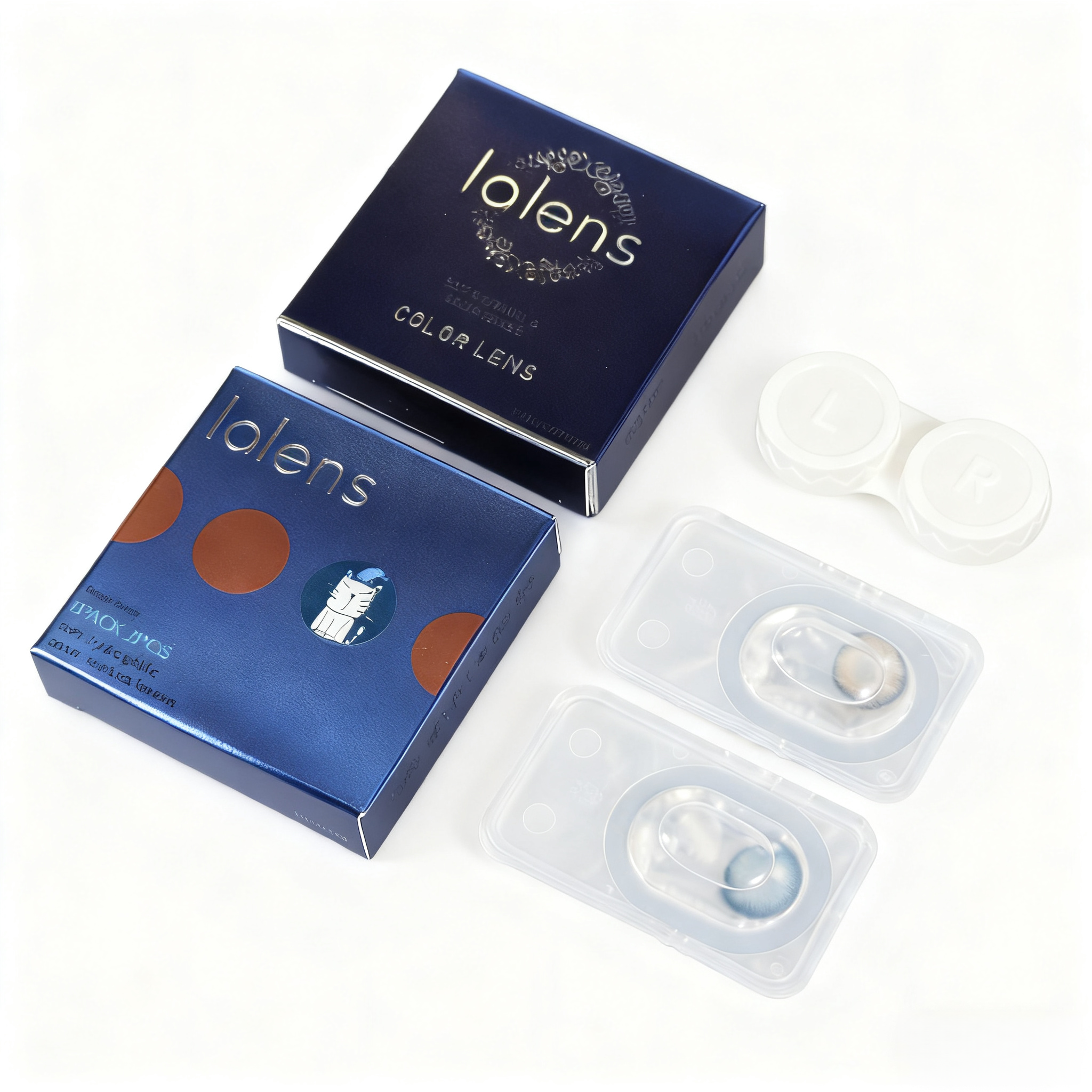
For standard in-stock color patterns (over 500 catalog designs), our MOQ begins at an accessible 100 pairs per SKU. For fully bespoke OEM/ODM private-label programs requiring custom-printed polypropylene blister foils, branded secondary rigid paperboard boxes, multilingual regulatory instruction inserts (IFU), and custom barcodes, our typical production run starts at 1,000 pairs per design with flexible power distribution from plano (0.00D) to -8.00D.
We employ a proprietary sandwich cast-molding technology. Rather than printing inks on the outer surface of a finished lens, the pigment layer is printed via micro-pad offset onto the interior mold half before polymer cross-linking. The liquid HEMA monomer then encapsulates the pigment completely between two bio-inert optical polymer layers. No color particle ever contacts corneal epithelial cells or the inner eyelid, ensuring 100% cytotoxicity pass rates under ISO 10993-5 standards.
Pre-production evaluation samples are typically dispatched within 48 to 72 hours via DHL, FedEx, or UPS express courier, arriving at European, American, or East Asian headquarters within 5 to 8 business days. Full-scale commercial production runs of private-label boxed lenses require 25 to 35 business days following final digital artwork sign-off. Bulk orders can be shipped via air express, DDP consolidated air freight, or ocean container freight with pre-cleared customs documentation.
Accelerate Your Brand's Medical Lens Sourcing Today
Connect directly with our senior optical engineers and international regulatory documentation team. Secure private-label pricing, request certified ISO 13485 / CE verification packages, and order free wear-test sample kits.
Inquire Now