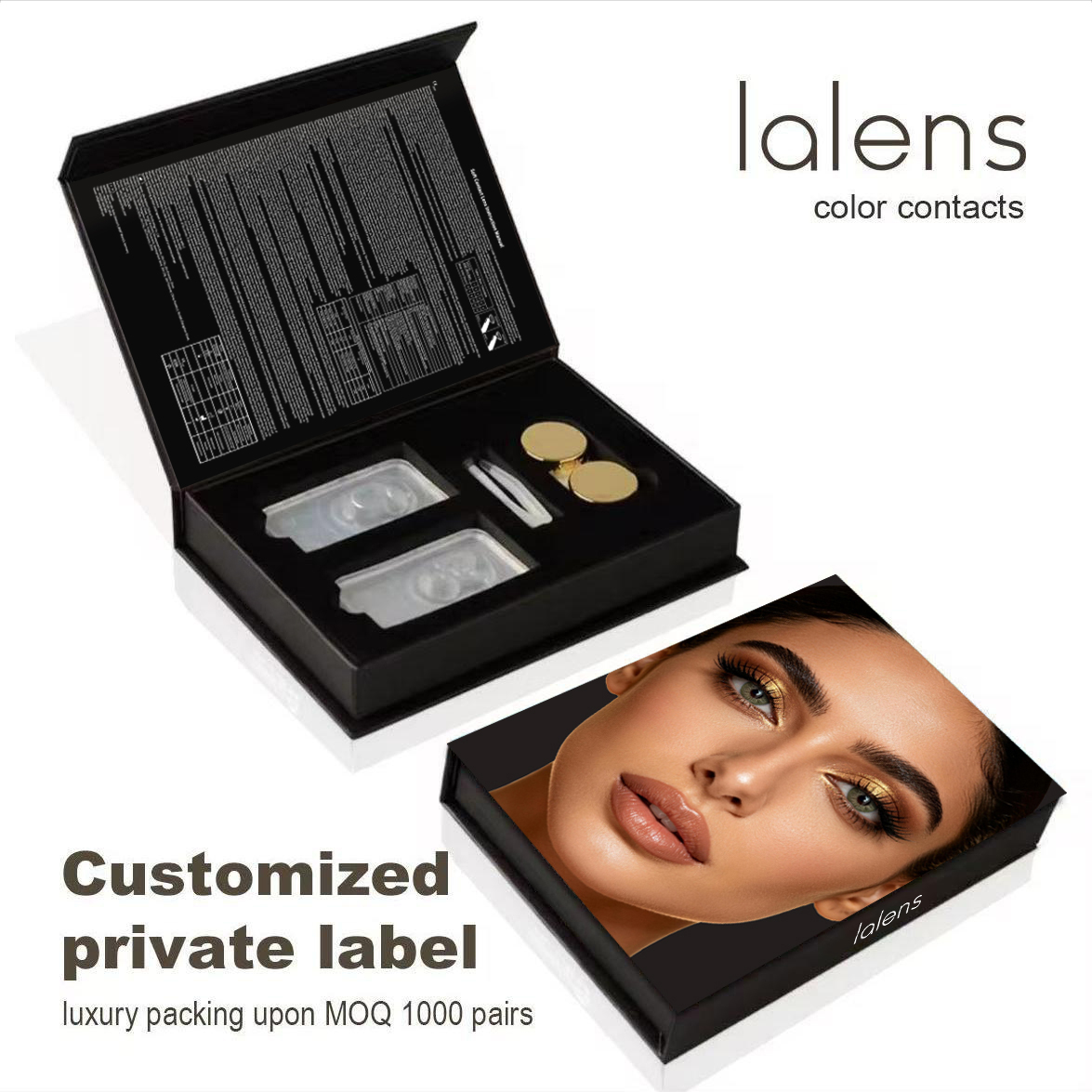
Product Portfolio
Engineered Optical Collections & Private Label Packaging Solutions
Precision-crafted cosmetic hydrogel series, specialty visual optics, and certified medical-grade packaging systems designed for direct international distribution.
Factory Capabilities
Sixteen Years of Cast-Molding Excellence & Cleanroom Infrastructure
Operating dedicated class 100,000 cleanroom facilities under ISO 13485 oversight, Shenzhen Lalens Co., Ltd delivers clinical repeatability for tier-1 distributors.
Medical-Grade Sandwich Tech
Pigment layers are molecularly sealed within biocompatible HEMA polymer matrices, ensuring zero direct epithelial contact and non-leaching chromatic stability.
Rapid Dispatch & DDP Logistics
Door-to-door express deliveries completed within 5 to 8 business days across the Americas and Europe, fully integrated with US Customs compliant paperwork.
MDR & FDA Registry Assistance
Comprehensive technical dossiers provided including biostatistical cytotoxicity records, stability evaluations, sterility validations, and full lot tracing.
Extensive Iris Print Vault
Over 500 validated cosmetic iris designs, specialized Halloween special-effects templates, and proprietary ODM patterns with regional exclusivity options.
16+
Years Clinical Molding
500+
Proprietary Iris Prints
40+
Export Territories
100%
Pre-Shipment Lot QC
Evolutionary Horizons in Hydrogel Synthesis and Cast Molding Automation
The commercial manufacturing of contact lenses has migrated from traditional lathe cutting into computerized cast molding frameworks that operate under nanoscale optical tolerance limits. At Shenzhen Lalens Co., Ltd, the integration of automated monomer casting lines ensures consistent sagittal depths, peripheral edge tapering, and central optical zones calibrated to ±0.02 mm surface concentricity. The mechanical transition across high-yield production cycles relies heavily on eliminating edge variances that typically induce micro-abrasions in end-wearers.
Biocompatibility and corneal metabolic integrity serve as paramount criteria in evaluating soft ocular prosthetics and decorative lenses. By utilizing 38% to 55% hydration balance matrices synthesized with 2-Hydroxyethyl Methacrylate (HEMA) copolymerized with hydrophilic agents like N-Vinylpyrrolidone (NVP), the lenses retain balanced oxygen permeability (Dk/t) while resisting lipid adherence and tear protein deposition. Incorporating full-encapsulation sandwich printing prevents the inorganic pigment compounds from breaching the external hydrogel boundary, which completely resolves common concerns regarding pigment shedding and ocular inflammation.
Furthermore, regulatory compliance landscapes across the European Union under EU MDR (Regulation 2017/745) and the United States FDA classify decorative and corrective lenses categorically as medical devices. As a reliable manufacturing partner, our plants operate under strict ISO 13485:2016 quality engineering guidelines. Each batch undergoes bioburden testing, accelerated shelf-life aging tests, colorfastness stability monitoring, and cycle autoclave sterilization (121°C for 30 minutes) within automated cleanrooms. This rigid quality control workflow provides global brand operators with complete regulatory documentation ready for rapid health authority filings.
Strategic Outlook
Next-Generation Sourcing & Procurement Architecture (2025–2030)
Key technological transformations shaping how multinational pharmaceutical groups, beauty brands, and fast-fashion retailers procure medical optical lines.
Silicone Hydrogel Material Shift
Procurement teams are shifting rapidly toward third-generation silicone hydrogel composites that offer over 4x higher oxygen transmissibility (Dk/t 100+), supporting healthy daily wear and premium retail positioning.
On-Demand Agile Batch Sizing
Modern cosmetic optical brands are cutting inventory overhead by sourcing smaller, agile batch runs. We offer scalable MOQ models starting from 100 units per color design to accelerate go-to-market testing.
Medical-Grade Packaging Automation
Demand for fully automated, eco-conscious secondary packaging—combining biodegradable blister cavities with verified anti-counterfeiting serialization—is quickly becoming standard for enterprise retail supply chains.
Buyer Knowledge Base
Frequently Asked Sourcing & Regulatory Inquiries
Direct technical answers addressing verification, custom labeling protocols, manufacturing capacity, and global trade standards.
What specific clinical credentials confirm medical conformity for international markets?
Shenzhen Lalens Co., Ltd operates under ISO 13485:2016 quality management systems for medical optical devices. Production batches meet CE Mark directives and follow international standards including ISO 18369 (Ophthalmic optics) and ISO 10993 (Biological evaluation of medical devices). We supply complete technical dossiers—covering cytotoxicity tests, systemic injection tests, and sterilization verification records—to support regional importer filings.
How does the sandwich encapsulation technique protect ocular physiology?
Traditional screen printing applies colorant directly to the lens exterior, increasing friction against the inner eyelid and risking pigment leeching. Our proprietary sandwich process seals micro-pigments between two layers of clear optical polymer. This keeps the exterior surface glass-smooth, eliminates color shedding, preserves oxygen flow through the matrix, and protects corneal tissues during long wearing hours.
What minimum order quantities (MOQs) apply to private label OEM programs?
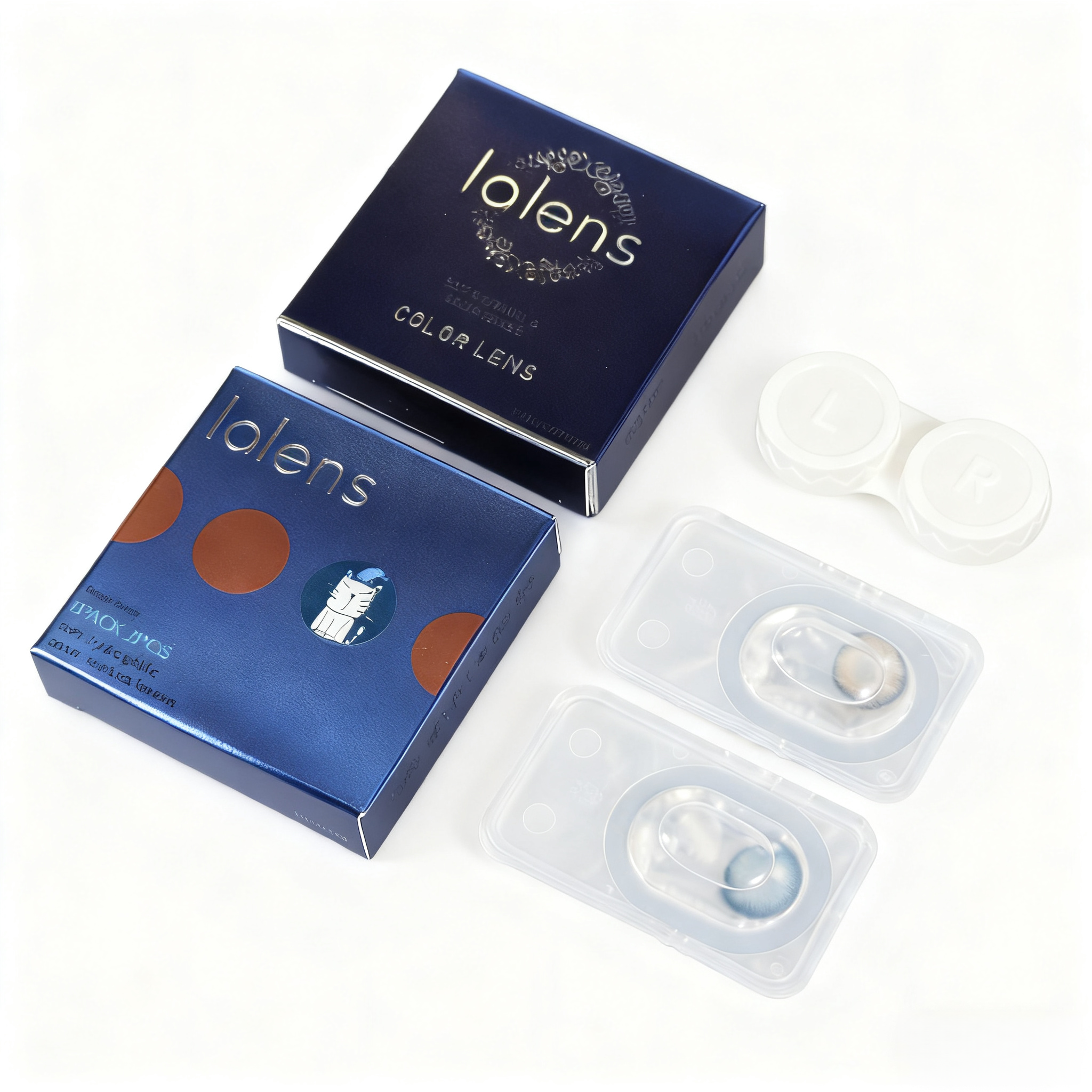
For existing catalog designs in stock blister packaging, minimum quantities start at 100 pairs per SKU. Fully tailored OEM private label orders—featuring custom outer boxes, branded foil seals, localized multi-language instructions, and custom blister prints—typically start at 1,000 pairs per artwork design. Custom iris color development (ODM) is available starting at 5,000 pairs per proprietary run.
What is the typical production timeline and international freight cycle?
Standard warehouse models dispatch within 48 to 72 hours. Custom private label orders generally take 20 to 30 business days from artwork sign-off, covering mold prep, cleanroom hydration, secondary packaging, and final autoclave sterilization. We offer express air transport via FedEx, DHL, or UPS arriving in 5 to 8 business days, as well as full-container DDP ocean freight services.
Can you support optical power corrections alongside cosmetic lens collections?
Yes. In addition to plano (0.00 diopter) cosmetic lenses, our cast lines mold myopic vision corrections from -0.50 to -10.00 diopters in standard increments (0.25D steps up to -6.00D; 0.50D steps from -6.00D to -10.00D). We calibrate power indices to a tight ±0.05D margin, ensuring that beauty collections deliver sharp corrective acuity alongside aesthetic appeal.
Initiate Your Custom OEM/ODM Optical Production Line
Connect with our technical engineering group to request sample evaluations, sterile lot documentation, or a comprehensive volume quotation tailored to your brand specifications.
Get Catalog