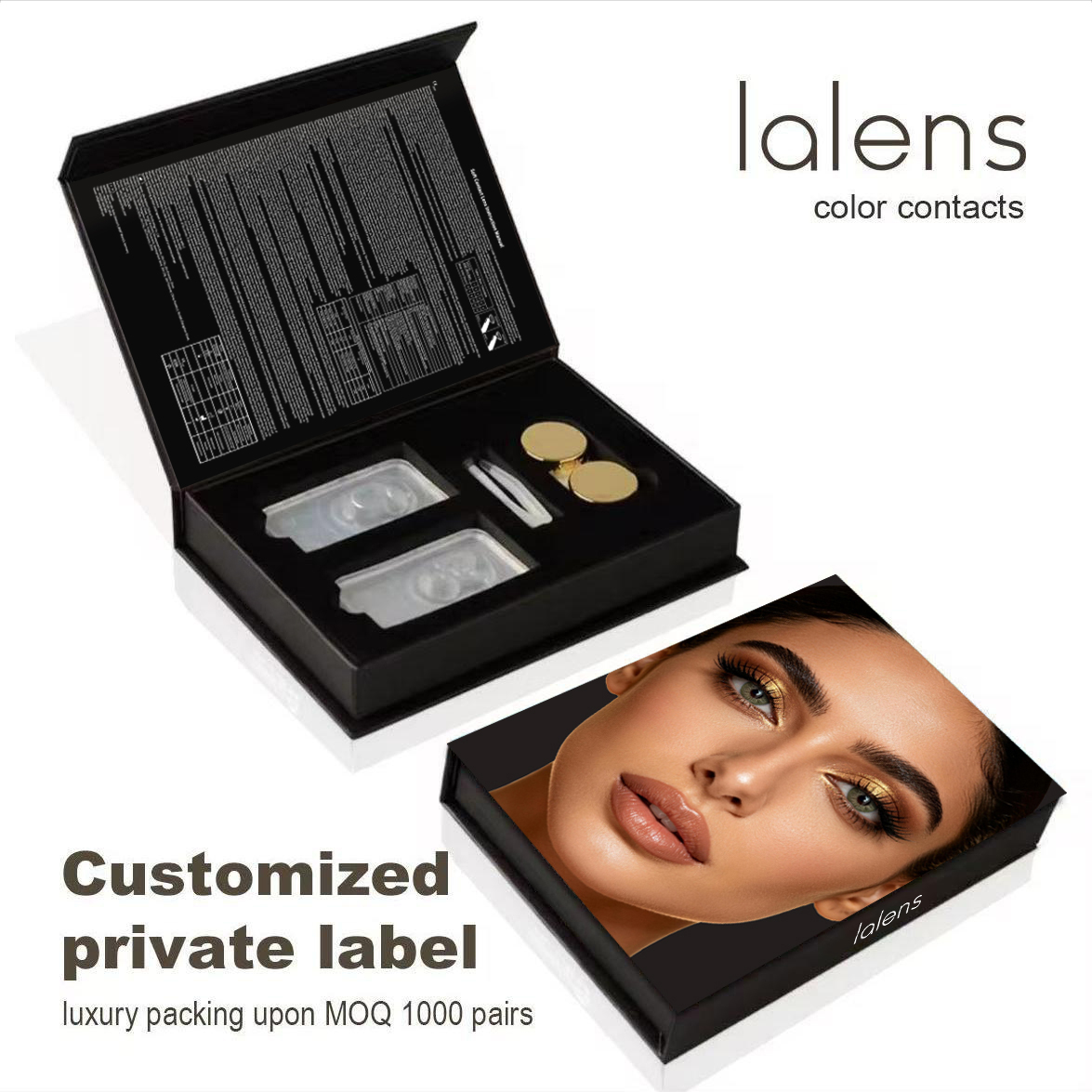
Rigid Packaging
Custom Logo Contact Lens Packaging Rigid Paperboard Square Box Private Label Cosmetic Packing
Structural cardboard, anti-scratch matte lamination, customized blister cavities, precision hot-stamping.
Engineered for optical distributors, medical retail brands, and multi-channel beauty importers. Our circle contact lens collections integrate high-definition limbal rings with certified biocompatibility, supported by full custom box-making capabilities.
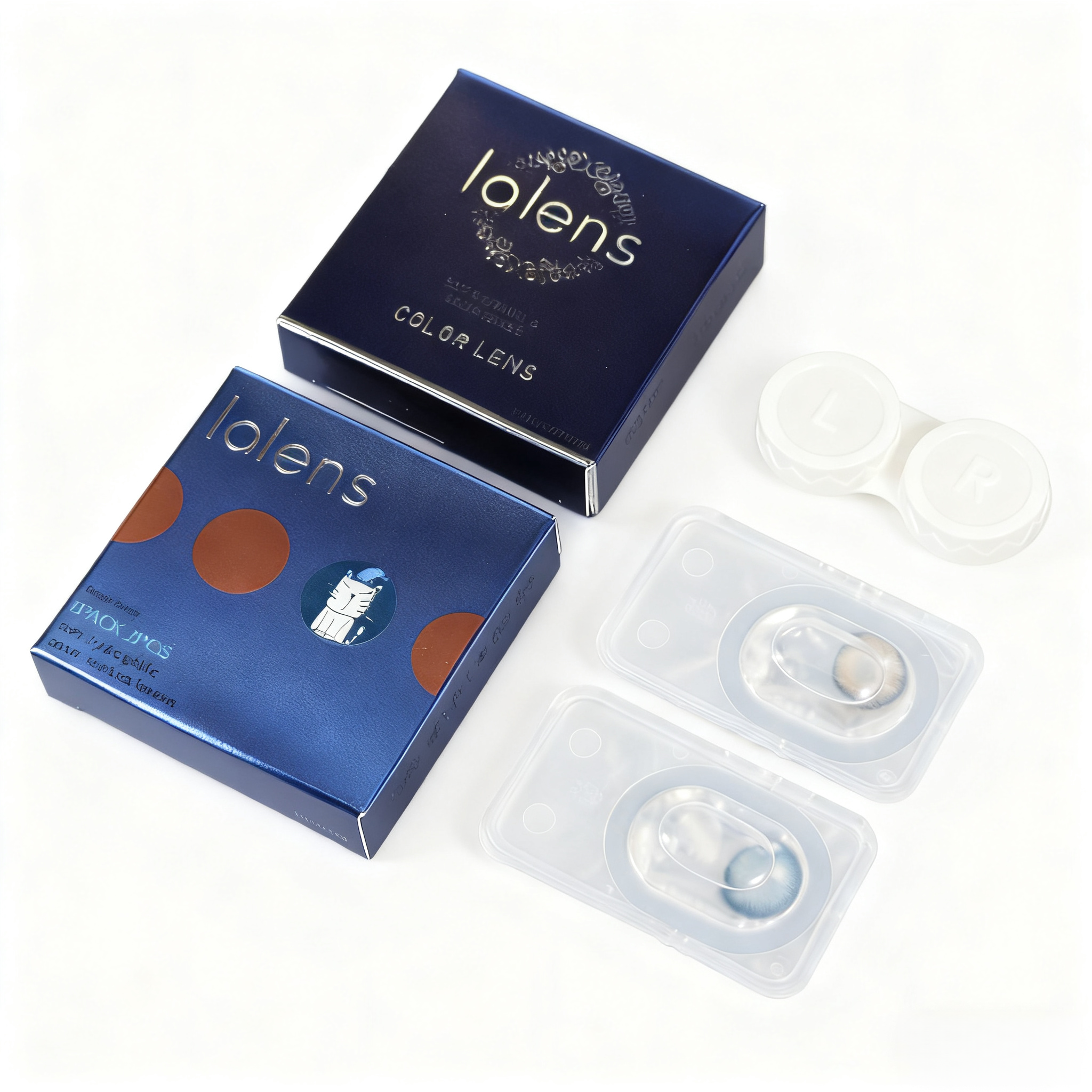
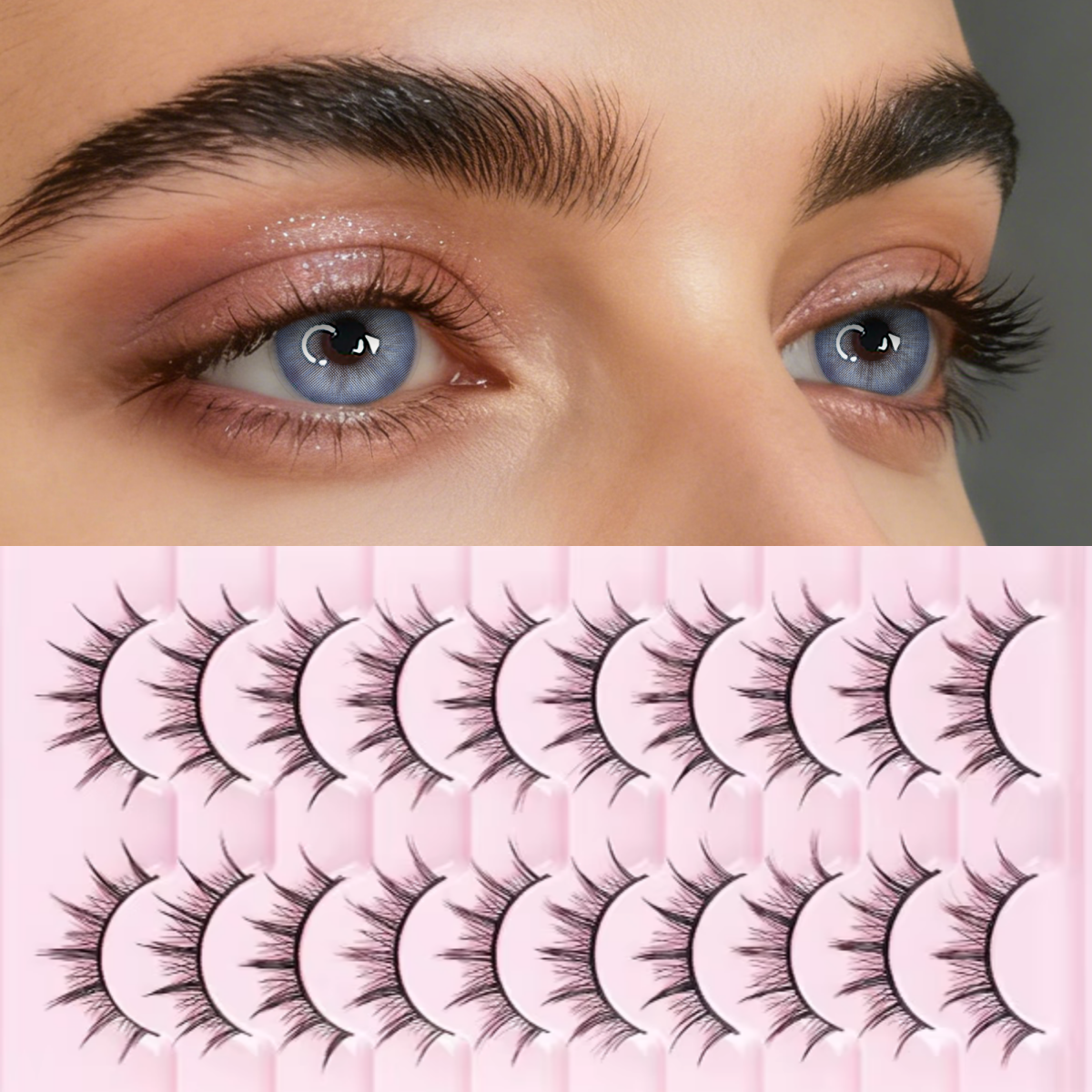
Direct pigment contact with the corneal epithelium represents a critical regulatory and clinical liability. Lalens Factory employs automated multi-layer cast-molding systems that isolate micro-pigments between biocompatible hydrogel membranes.
Utilizing high-precision sandwich printing automation, color inks are locked inside the core matrix of Poly-HEMA (2-hydroxyethyl methacrylate). The exterior surfaces contacting the ocular tissue and palpebral conjunctiva remain 100% pure, unprinted polymer, preventing pigment elution and mechanical abrasion.
Circle lenses with dark, prominent outer limbal rings traditionally suffer from oxygen transmission bottlenecks. Our proprietary dot-matrix micropatterning leaves unprinted micro-channels that allow tear exchange and maintain corneal aerobic metabolism throughout extended wear schedules.
Each production run executes inline 100% automated optical power verification from plano (0.00D) up to -10.00D. Computer vision inspects optical zone eccentricity and limbal diameter concentricity to ensure zero visual distortion or peripheral field occlusion.
| Technical Metric | Cast Molded Daily Series | Monthly Hydration Series | Annual Cosmetic Series |
|---|---|---|---|
| Base Curve (BC) | 8.5 mm – 8.6 mm (±0.02mm) | 8.6 mm (±0.02mm) | 8.6 mm (±0.02mm) |
| Diameter (DIA) | 14.0 mm – 14.2 mm | 14.2 mm – 14.5 mm | 14.0 mm – 14.5 mm |
| Water Content (%) | 55% High Hydration HEMA | 42% Stable Hydrogel | 38% Tear-Conserving HEMA |
| Center Thickness (@ -3.00D) | 0.06 mm | 0.08 mm | 0.07 mm – 0.09 mm |
| Pigment Encapsulation | Tri-Layer Micro-Sandwich | Tri-Layer Micro-Sandwich | Dual-Side Polymer Overcoat |
| Sterilization Standard | Moist Heat Autoclave (121°C, 30m) | Moist Heat Autoclave (121°C, 30m) | Moist Heat Autoclave (121°C, 30m) |
Understanding structural shifts in the contact lens supply chain allows brands to de-risk inventory, meet tighter FDA/MDR regulatory mandates, and capitalize on evolving consumer aesthetics.
Global buyer demand is accelerating from traditional Poly-HEMA to third-generation Silicone Hydrogel substrates. Si-Hy delivers 4x to 5x higher oxygen transmissibility (Dk/t > 80), mitigating hypoxia-induced limbal hyperemia during long cosmetic wear sessions.
B2B order volumes for daily replacement circle lenses have grown by 34% year-over-year. Consumers prioritize hygiene and zero cleaning routines, shifting wholesale demand from annual vials to 10-pack and 30-pack micro-blister cartons.
Heavy anime-style opaque block rims are giving way to gradient radial spikes and low-contrast perimeter tones. Western markets demand natural iris enhancement with graphic diameters between 13.0mm and 13.4mm inside a 14.2mm lens envelope.
Global regulatory enforcement requires device manufacturers to maintain comprehensive 510(k) master files, UDI (Unique Device Identification) barcoding, and automated bioburden testing to survive border audits and FTC compliance checks.
Shenzhen Lalens Co., Ltd operates 16 years of certified medical-grade lens production. By centralizing mold prototyping, automated cast molding, hydration, blister packaging, and secondary paperboard assembly under one roof, we eliminate intermediate markups and lead-time volatility.
Class 100,000 clean-room production with automated particulate count monitoring, constant temperature control, and closed-loop DI water purification loops.
Complete medical device quality management system documentation ready for your designated US Agent, EU Authorised Representative, or regional health authorities.
Access our vast library of high-contrast circle rings, multi-tone natural hazel/gray pigments, and theatrical cosplay graphics with low initial MOQ requirements.
Complete custom packaging engineering including rigid gift boxes, retail cardboard folding cartons, sterile blister foils, English user inserts, and compliant UPC/EAN barcodes.
Direct communication with experienced technical account leads covering Eastern, Central, and Pacific business hours for immediate quotation and batch sampling.
Addressing legal classification, minimum order commitments, regulatory submissions, and logistic lead times for overseas lens distributors.
Yes. Under the US FDA (21 CFR 886.5925) as well as the EU MDR (Regulation 2017/745 Annex XVI), all contact lenses placed on the ocular surface are legally classified as Class II (FDA) or Class IIa/IIb (CE) medical devices regardless of whether corrective power is present. Sellers in the US are subject to the FTC Contact Lens Rule, which mandates valid prescription verification. We supply all supporting technical dossiers, Device Master Files, biocompatibility tests (ISO 10993 cytotoxicity, ocular irritation, systemic toxicity), and compliant labeling terminology.
For existing stock designs across our 500+ pattern portfolio, MOQs typically start at 100 pairs per design/colorway with generic packaging. For full private-label programs involving bespoke graphic iris printing, custom-printed blister sealing foils, and branded cardboard folding boxes or rigid boxes, minimum runs are generally 1,000 pairs per SKU to balance high-speed mold prep and printing cylinder setup costs.
We do not use surface printing or direct pad printing on finished polymer surfaces. We use cast-molding encapsulation (commonly termed the sandwich method). The pigments—composed of FDA-approved inorganic iron oxides, titanium dioxide, and phthalocyanine compounds—are suspended within reactive monomer and chemically crosslinked inside the polymer matrix during UV/thermal polymerization. Pigment wipe tests and ultrasonic leaching tests prove zero pigment extraction or surface release over the intended shelf life.
Evaluation sample shipments are dispatched via international courier (DHL, FedEx, UPS) within 3 to 5 business days and arrive in major US/EU hubs within 5 to 8 business days. Commercial production lead time for customized private label orders ranges from 25 to 35 calendar days following packaging artwork signoff. Shipments can be arranged via express air courier, air cargo with customs clearance documentation, or consolidated ocean freight (FCL/LCL) under standard Incoterms (EXW, FOB, CIF, or DDP).
Yes. While our standard platform operates at 14.0mm–14.5mm diameter and 8.6mm base curve, our tooling and precision CNC mold-turning machines can develop custom optical configurations ranging from 13.8mm to 15.0mm diameter and 8.4mm to 8.8mm base curve. Water content can be calibrated from 38% (high tear-retention for dry environments) up to 55% (high-hydration daily disposables) depending on target brand positioning.