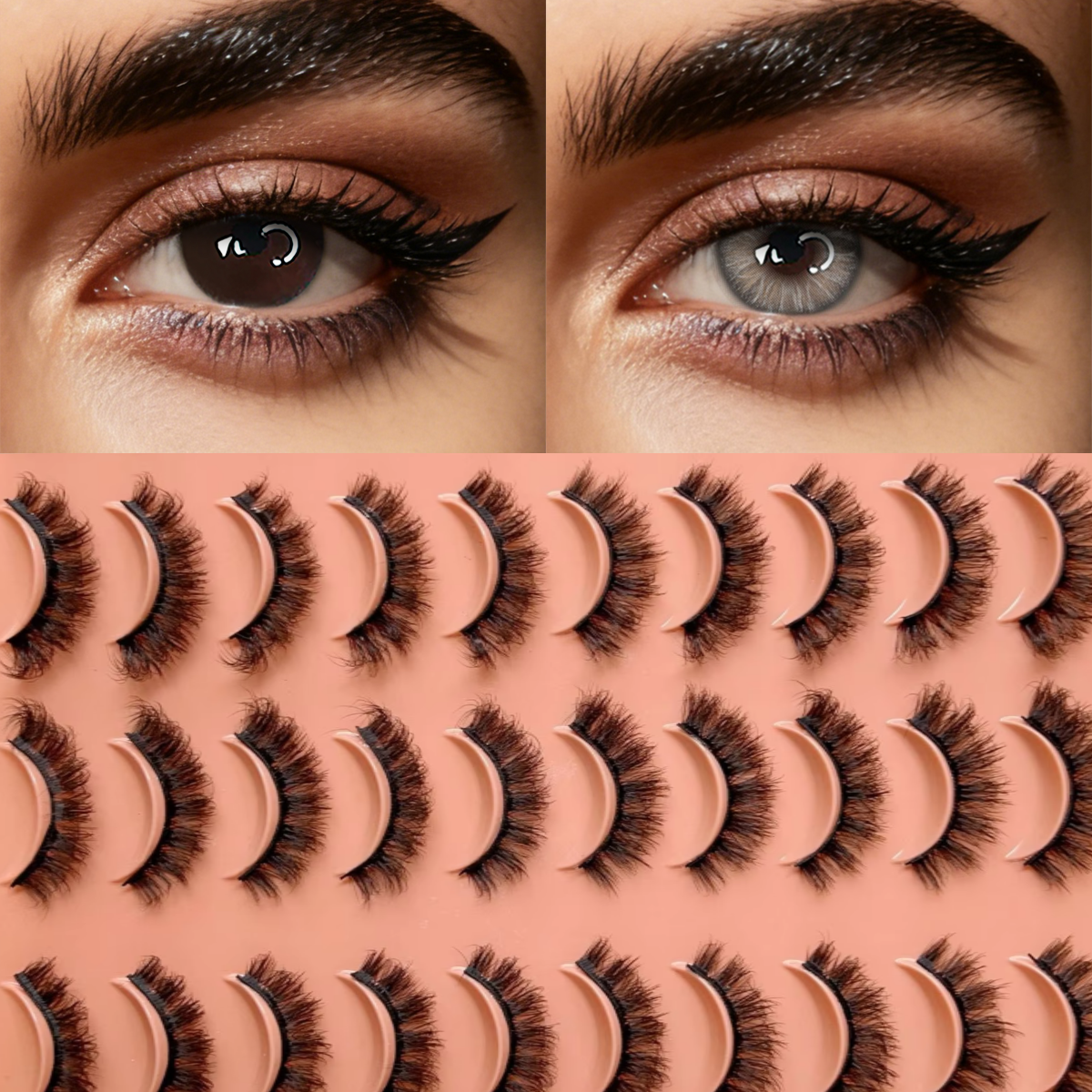
Glacier Gray Korean Natural Circle Lens
MaterialHEMA-NVP 38%
DIA / BC14.2mm / 8.6mm
Power0.00 to -10.00D
LifecycleDaily / Yearly
Standard and customized solutions direct from our Shenzhen casting facility. All cosmetic circle lenses and complementary ocular cosmetics are manufactured under strict GMP compliance, ready for international medical device registration.
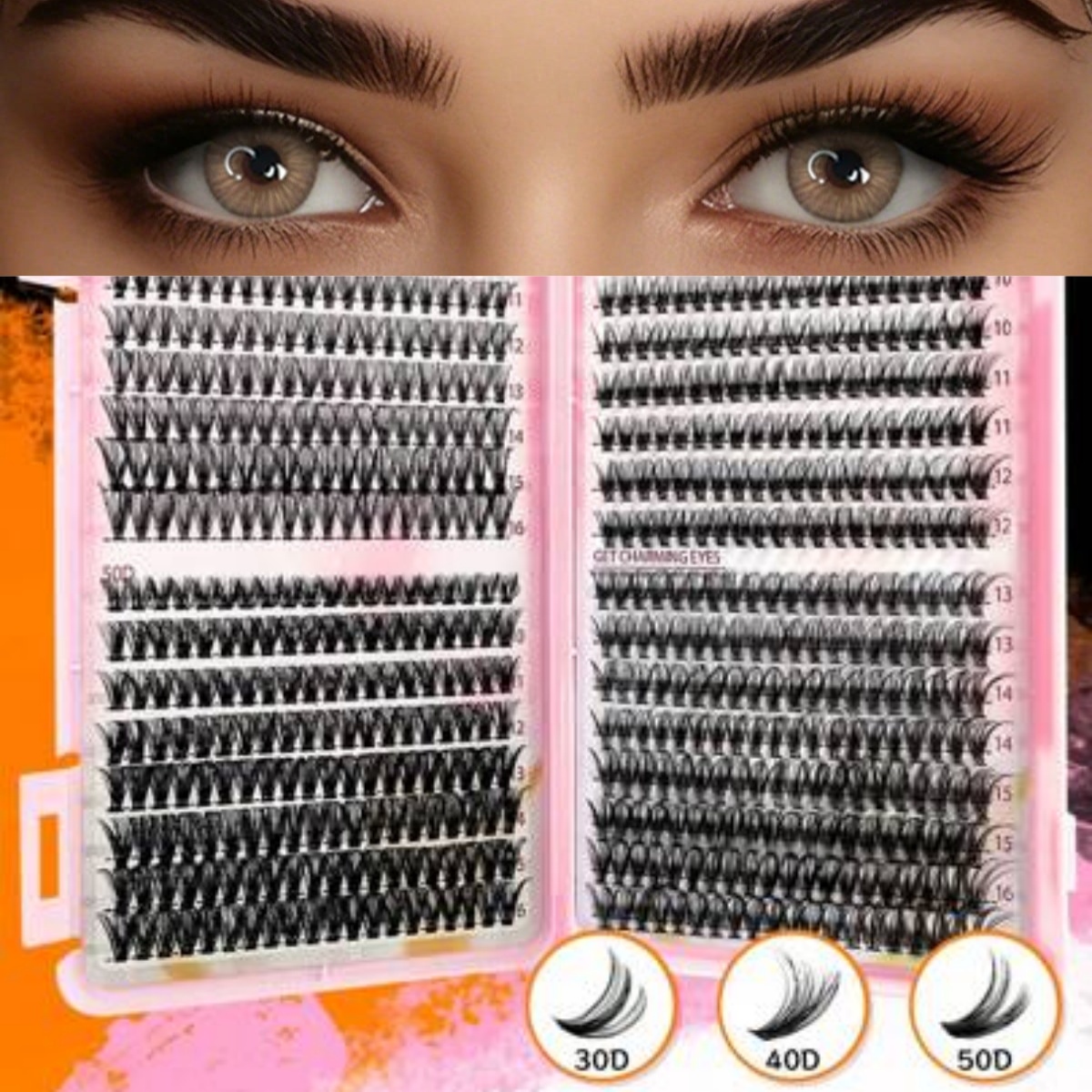
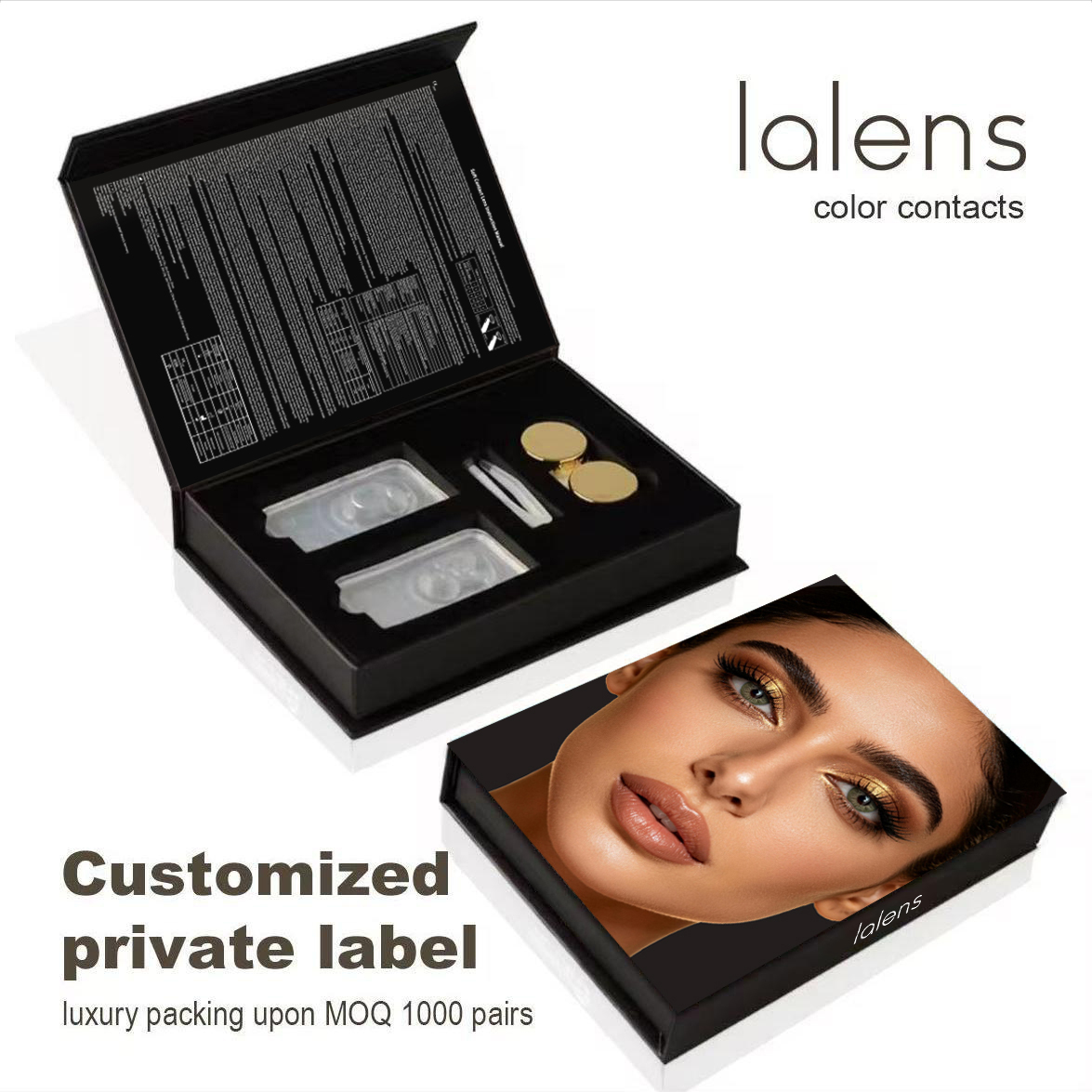
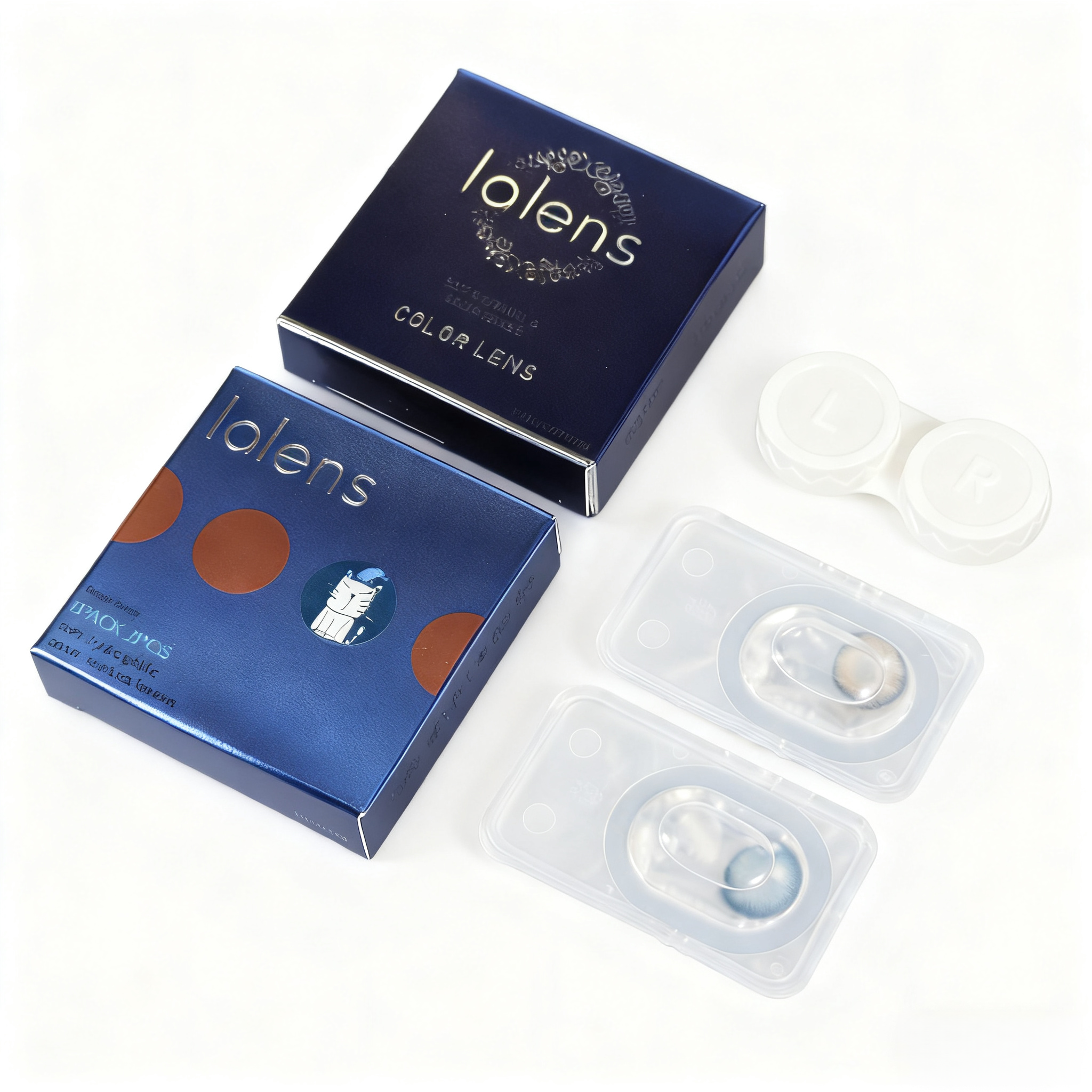
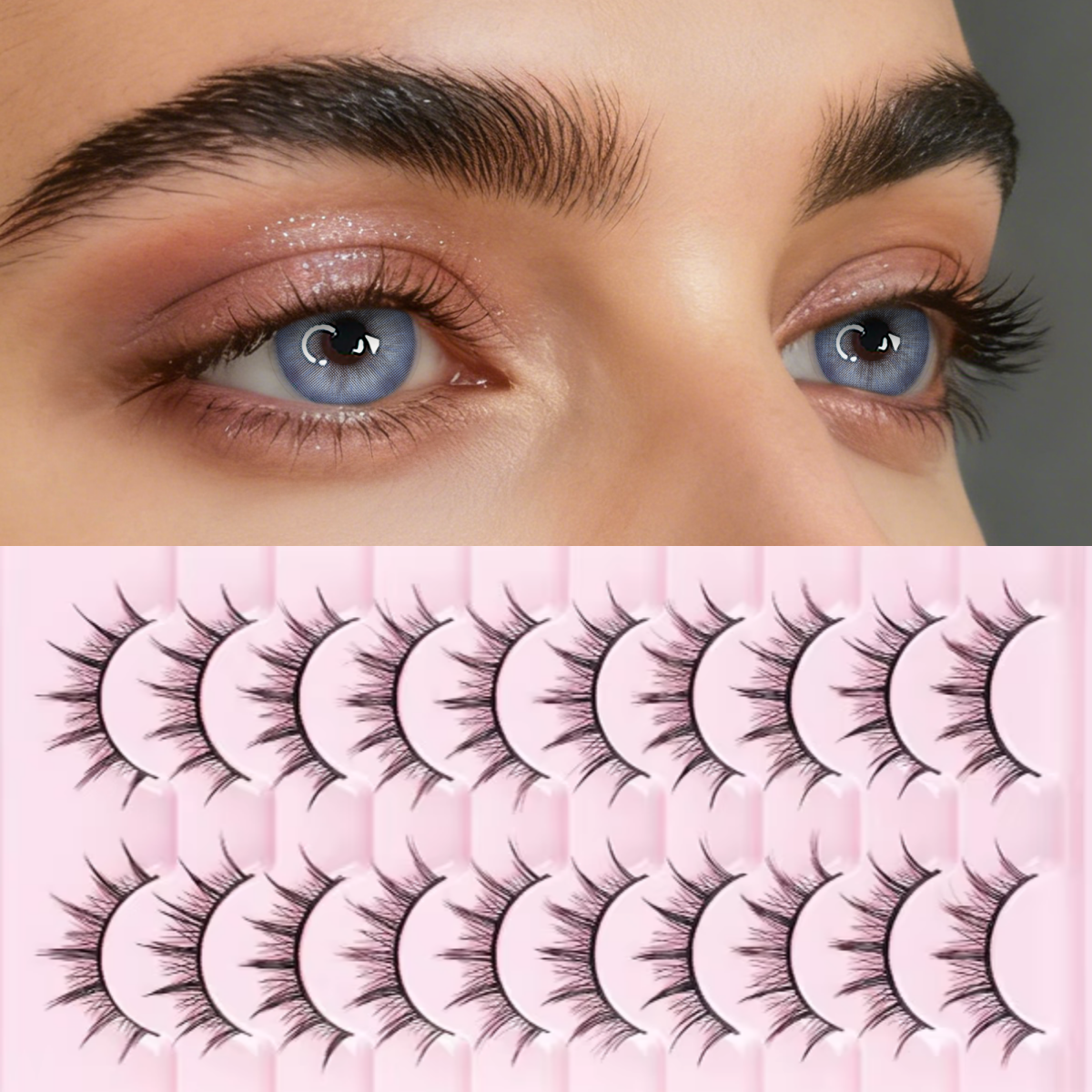
While the aesthetic concept of the "Korean circle lens"—accentuated limbal rings, depth-enhancing iris striations, and enlarged ocular appearance—originated in South Korea, Shenzhen Lalens Co., Ltd has elevated the product to pharmaceutical-grade medical device manufacturing. Today, leading global retailers source from our Chinese automated cast-molding foundries to achieve superior batch-to-batch color repeatability, tighter dimensional tolerances, and high-volume scalability.
Unlike substandard cosmetic lenses where reactive dyes are surface-printed, our foundry employs a precision 3-layer cast molding technology (Plusier method). Pigment nanoparticles are molecularly encapsulated between inert hydrogel layers, guaranteeing 100% isolation from the corneal epithelium and palpebral conjunctiva.
Every circle lens batch is manufactured in certified ISO 14644-1 Class 100,000 cleanrooms with automated multi-cavity precision molds. Automated optical inspection (AOI) detects sub-micron burrs, tears, center thickness deviations, and concentricity variances before terminal autoclave sterilization.
We serve as an end-to-end partner for optical groups, retail chains, and beauty startups. Beyond lens manufacturing, we design and produce custom rigid packaging boxes, blister foils, bilingual patient instruction leaflets, and custom barcode labels that comply strictly with international regulatory authorities.
Sourcing directors frequently evaluate legacy Korean manufacturers against high-tier Chinese facilities. The data below outlines how automated Chinese infrastructure has redefined lead times, cost efficiency, and clinical quality control in the circle lens sector.
| Evaluation Parameter | Legacy South Korean Suppliers | China Lalens Advanced Foundry | B2B Procurement Impact |
|---|---|---|---|
| Molding Methodology | Semi-manual cast molding or legacy spin-casting. Higher labor-induced variance. | Fully automated CNC multi-cavity injection cast-molding lines. | Eliminates edge roughness; yields consistent 8.6mm Base Curve across 1,000,000+ units. |
| Color Pigment Embedding | Surface pad printing or traditional 2-step curing with variable encapsulation. | Sandwich Micro-Polymer Encapsulation (Plusier Process). Pigment never touches eye. | Eliminates regulatory recall risk caused by pigment shedding or cytotoxic leachable dyes. |
| Color Drift Delta-E (ΔE) | ΔE > 1.5 across seasonal production lots. Noticeable shade shifts. | ΔE < 0.5 verified via multi-point spectrophotometric robotic scanning. | Repeat orders match first-run retail samples perfectly; prevents customer returns. |
| Standard Production Lead Time | 60–90 calendar days due to fragmented supply chains and subcontracted blister lines. | 25–35 calendar days for bespoke private label; 7–10 days for active stock patterns. | Faster capital turnover, reduced inventory carrying costs, quick seasonal response. |
| Integrated Packaging Solutions | Limited. Buyers must source cartons, leaflets, and cases from external vendors. | All-in-one manufacturing: Rigid boxes, cartons, blister packaging, and secondary logistics. | Zero coordination friction; guaranteed dimensional fit between blister packs and rigid boxes. |
Brand directors and procurement managers must navigate major shifts in consumer habits, material science, and regulatory compliance. Our optical analysis identifies four core trends driving the circle lens sector through 2030.
While yearly and monthly circle lenses remain commercial mainstays in emerging markets, North America, Japan, and Western Europe are seeing a rapid shift toward daily disposables. Wearers prioritize microbial safety, zero-maintenance regimens, and instant biocompatibility.
By leveraging biocompatible polymers like Hioxifilcon A (55% water content) and silicone hydrogel matrices, Chinese manufacturing now offers daily disposable circle lenses with ultra-thin center profiles (0.06mm at -3.00D) and high oxygen transmissibility, providing end-users with all-day comfort without ocular redness.
Brands targeting North America and Europe should allocate at least 40% of their private-label portfolio to daily disposables in 10-pack or 30-pack configurations to capture repeat subscription revenue.
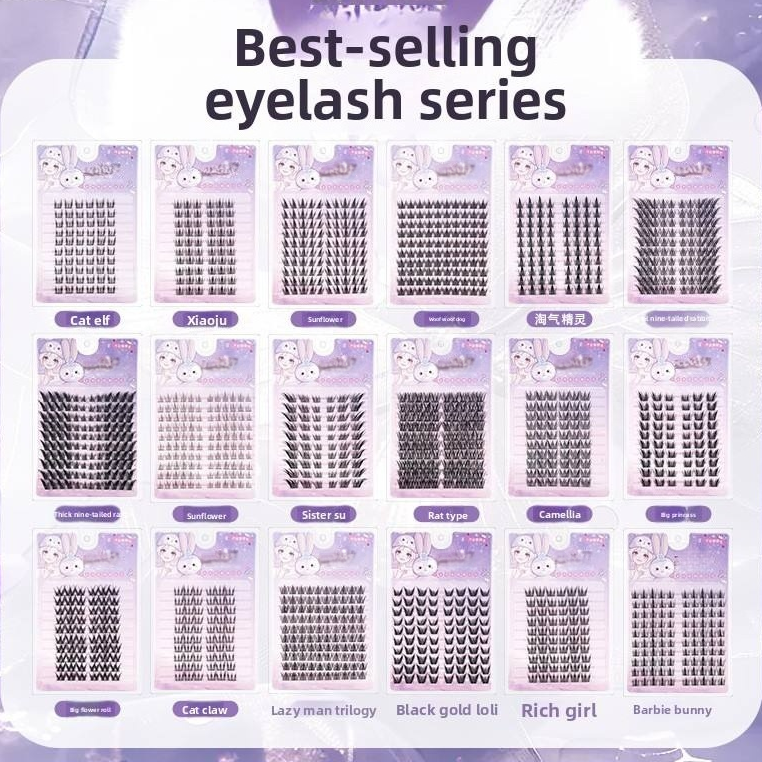
Get a QuoteCosmetic consumers no longer view circle lenses in isolation; they integrate them into complete eye-makeup regimens. Leading D2C beauty brands achieve higher average order values (AOV) by co-packaging circle lenses with matching faux mink false eyelashes, glue-free cluster extensions, and custom cosmetic rigid cases.
Our turnkey manufacturing accommodates unified production runs where cosmetic lenses, paperboard packaging, and high-curl eyelashes are developed under one cohesive brand identity.
Regulatory authorities, including the US FDA (under the FTC Contact Lens Rule) and European notified bodies under EU MDR (2017/745), are enforcing stricter oversight on cosmetic contact lenses. Importers must ensure their foundry provides full batch traceability, steam sterilization validation data, and ISO 10993 cytotoxicity testing.
Our documentation package includes device master records (DMR), technical construction files, and pre-cleared labeling templates ready for customs clearance.
Early Korean circle lenses relied on heavy, opaque black outer rings (14.5mm–14.8mm graphic diameter) that created an artificial "doll-like" aesthetic. Today's global trend leans toward subtle, multi-layered realism: 13.0mm–13.8mm graphic diameters with feathered outer borders, trans-pupillary gradient blends, and light-reflecting hazel tones.
Our in-house design studio releases over 30 new market-calibrated iris patterns every quarter, giving partners early access to trending color combinations.
Because cosmetic contact lenses sit directly on the cornea, a sourcing failure can result in severe clinical complications, regulatory confiscations, or brand-damaging recalls. Every optical procurement team should enforce a 4-point verification audit prior to contract signing.
| Audit Dimension | Critical Test Metric | Minimum Acceptable Standard | Lalens Quality Assurance Guarantee |
|---|---|---|---|
| Pigment Isolation | Rub-off cotton bud test with acetone / alcohol solvent; ISO 10993-10 leachable assay. | Zero pigment migration; 100% molecular encapsulation in hydrogel core. | Proprietary thermal encapsulation prevents pigment exposure under mechanical friction or chemical challenge. |
| Geometric Tolerances | Non-contact optical projection measuring Base Curve (BC) and Overall Diameter (DIA). | BC tolerance within ±0.15mm; DIA tolerance within ±0.20mm. | Automated CNC molds maintain tight tolerances within ±0.08mm across standard 8.6mm BC profiles. |
| Dioptric Power Accuracy | Automated Lensmeter wet-cell measurement across spherical correction range. | Powers 0.00 to -6.00D (±0.25D); powers -6.50 to -10.00D (±0.50D). | 100% automated wet-cell power verification before blister sealing eliminates labeling mismatches. |
| Sterility & Endotoxin | USP <71> Sterility Test; USP <85> Bacterial Endotoxins test (LAL). | Sterility Assurance Level (SAL) 10⁻⁶; Endotoxin <0.5 EU/lens. | Validations conducted per ISO 17665 steam sterilization standards in terminal autoclaves. |
Practical answers to technical, regulatory, and commercial inquiries from optical importers, cosmetics brands, and e-commerce aggregators.
Partner directly with China's leading OEM/ODM circle lens and eye cosmetic foundry. Connect with our technical engineers for pattern catalogs, ISO 13485 quality dossiers, and customized private-label pricing quotations.