Private Label Cosmetic Contact Lenses & Premium Packaging Systems
Direct from our cleanroom manufacturing hub: Explore verified optical devices, custom-branded rigid packaging, and complementary cosmetic products engineered to scale your retail brand margin.
Navigating the Global Colored Contact Lens Supply Chain
A comprehensive examination of polymer technology, bio-compatibility standards, regulatory scrutiny, and consumer market shifts for wholesale buyers and brand owners.
Advanced Micro-Sandwich Encapsulation
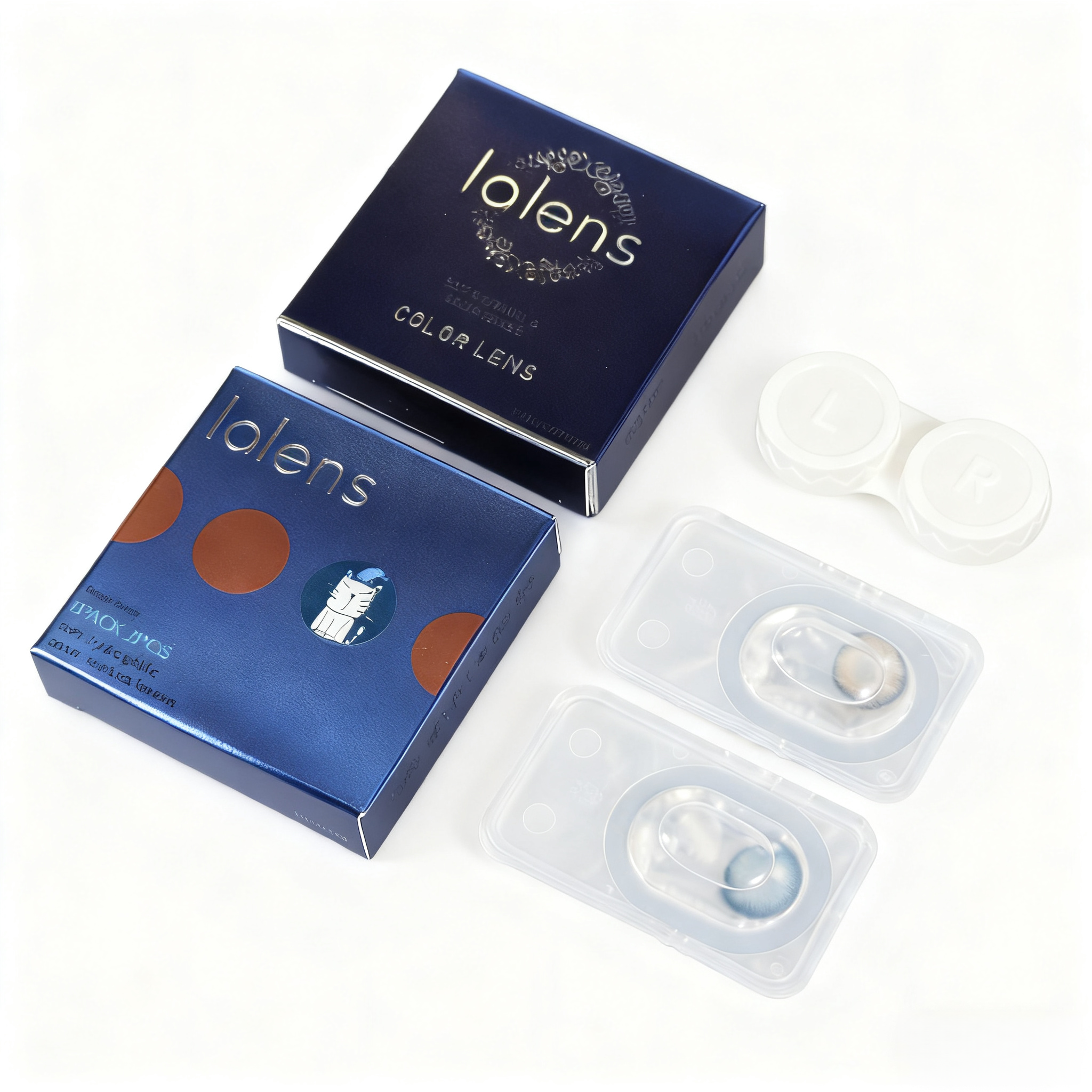
The standard baseline in modern contact lens safety requires absolute color stability without surface exposure. Our factory utilizes proprietary 3-Layer Micro-Sandwich Technology, sealing FDA/CE compliant cosmetic pigments securely inside biocompatible 2-HEMA and MPC hydrogel matrices. This guarantees that chemical pigments never make direct contact with the wearer's cornea or palpebral conjunctiva, completely preventing pigment leaching, friction discomfort, and long-term ocular irritation while ensuring vibrant, high-definition tint fidelity.
Stringent Regulatory & ISO 13485 Framework
Cosmetic lenses are classified as Class II or Class III medical devices across leading jurisdictions, including the US FDA, European MDR, and international MOH bodies. We maintain strict compliance operating under ISO 13485:2016 quality management frameworks and certified Class 100,000 cleanroom operational parameters. Every private label batch is accompanied by comprehensive Technical Documentation Files (TDF), biocompatibility assays (cytotoxicity, systemic toxicity, ocular irritation), and verified lot traceability protocols.
Cast-Molding Automation & Optical Precision
Utilizing high-precision digital CNC lathe steel tooling alongside continuous cast-molding automated lines, our facility mitigates structural deviations in edge designs and curvature profiles. Maintaining an exact base curve (BC 8.6mm) and controlled peripheral edge-lift profiles ensures consistent post-lens tear replenishment and physiological corneal oxygen kinetics. Optical powers are calibrated seamlessly across Plano (0.00) down to -10.00D myopic ranges with zero chromatic dispersion.
Procurement & Technological Trends Shaping 2025–2030
Actionable data for inventory managers, wholesale procurement directors, and venture-backed beauty brands to safeguard market share.
The Shift Toward Daily Disposables
While yearly and monthly wear modalities historically dominated wholesale volumes in emerging economies, the European and North American markets are experiencing double-digit annual procurement migration toward Daily Disposables (1-Day Modalities). Elevated hygiene awareness, convenience-driven consumption, and lower risks of microbial keratitis incentivize brands to prioritize blister-packed daily collections, driving continuous repeat purchases and elevated customer lifetime value (LTV).
High-Dk Silicone Hydrogel Penetration
Consumer demand for longer wearing comfort has pushed research into high oxygen-permeable Silicone Hydrogel (SiHy) formulations with lower modulus. By optimizing internal wetting agents (such as PVP and hyaluronic acid crosslinking) without compromising pattern transfer fidelity, modern procurement directors are diversifying portfolios beyond standard 38%-55% HEMA hydrogels into next-generation SiHy matrices to serve professional optometrist channels.
Sustainable & Anti-Counterfeit Packaging
Medical cosmetic packaging is transitioning from standard blister films to FSC-certified biodegradable cartons, ultra-compact polypropylene PP blister shells, and holographic tamper-evident seals. In response to illicit copycat markets, global private labels now demand serialized QR codes embedded inside structural cardboards to ensure real-time authenticity validation and end-consumer engagement right at the point of sale.
Uncompromising Manufacturing Edge: Lalens Factory Excellence
Combining 16 years of high-volume precision manufacturing with agile, low-barrier private label OEM/ODM programs tailored for international scalability.
500+ Proprietary Patterns
Instant access to an extensive archive of hyper-realistic multi-tone irises, enlarging limbal rings, natural gradient tones, and seasonal theatrical/FX aesthetics developed by seasoned optical engineers.
Rapid Sample Iteration
Verify wear-comfort, limbal blending, and packaging dimensions swiftly. Comprehensive evaluation samples dispatched via DHL, FedEx, or UPS reach US and European commercial centers within 5 to 8 business days.
Full Private Label Ecosystem
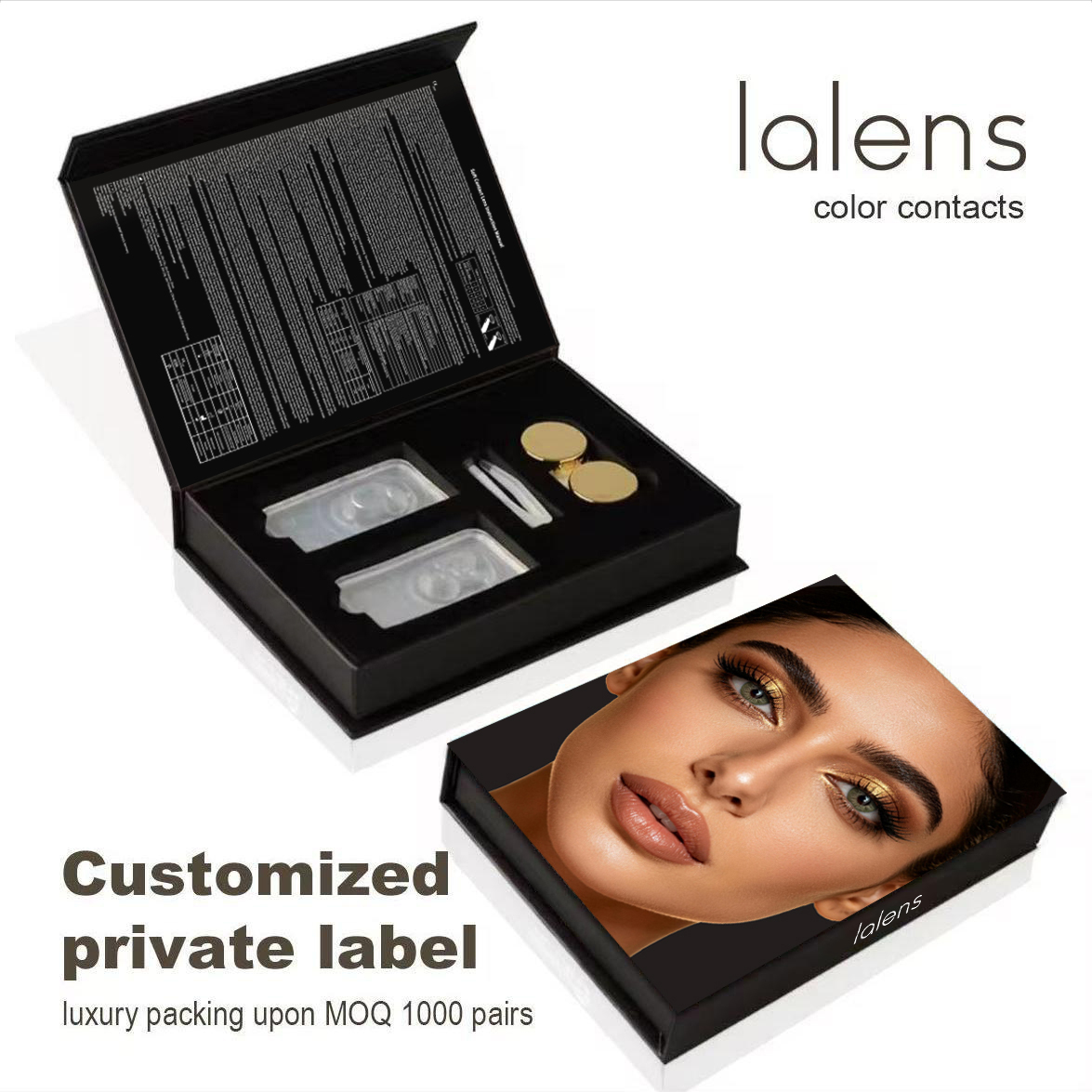
From primary blister/vial sealing to structural rigid paperboard design, localized multilingual IFU inserts, and GTIN barcode integration, we transform your design vision into market-ready retail shelf units.
Regulatory & DDP Logistics
Benefit from end-to-end commercial documentation, Class II technical dossiers, and turnkey Delivered Duty Paid (DDP) logistics channels directly to your fulfillment centers across North America, Europe, and Asia.
Frequently Asked Questions for B2B Importers
Clear, direct answers regarding regulatory mandates, minimum order requirements, chemical stability, and mass production workflows.
Are colored contact lenses considered cosmetics or medical devices under US and international law?
Under United States federal law (regulated by the FDA) and the European Medical Device Regulation (EU MDR 2017/745), decorative, plano (zero-power), and corrective colored contact lenses are classified strictly as medical devices. They cannot be legally distributed merely as general cosmetic merchandise. In the US, distribution requires adherence to the FTC Contact Lens Rule, which dictates prescription verification, medical device listing, and validated packaging compliance. We furnish complete technical dossiers to ensure seamless compliance for our brand partners.
What are the standard Minimum Order Quantities (MOQ) for bespoke OEM private labeling?
For existing certified stock designs packed in universal factory blisters, trial orders can begin at flexible volumes of approximately 100 pairs per SKU. For fully tailored private label turnarounds—encompassing customized rigid printed gift packaging, custom-printed aluminum blister foil tops, localized English/multilingual user instruction leaflets, and custom iris color calibration—standard production runs commence at 1,000 to 3,000 pairs per design variant.
How do you prevent pigment migration and ensure wearer ocular safety?
Our cleanroom manufacturing facility utilizes an automated Cast-Molding Sandwich Process. Instead of printing pigments onto the external surface of cured lenses, our printing plates apply biocompatible non-toxic colorants inside an intermediate layer. A micro-thin, ultra-smooth boundary layer of hydrogel covers the pigments completely before full thermal-hydration and wet autoclaving. The finished lens surface remains completely smooth, preventing mechanical friction with ocular tissues and eliminating cell cytotoxicity risks.
What are the available base curve, diameter, and hydration parameters?
Our standard clinical specifications are designed to achieve universal comfort: Diameters (DIA) range between 14.0mm to 14.5mm with a standard Base Curve (BC) of 8.6mm, ensuring optimal centering and corneal sag height fitment. Water content formulations range from 38% to 55% HEMA hydrogel compositions, engineered to resist environmental dehydration during air-conditioned indoor office use. Optical powers span from 0.00 (Plano) to -10.00D with increments of 0.25D (from -1.00 to -6.00D) and 0.50D (from -6.00 to -10.00D).
What is the expected production turnaround and international logistics timeframe?
Standard lead times for re-ordering existing catalog inventory span approximately 7 to 15 business days. Bespoke private label packaging programs requiring primary and secondary packaging fabrication run between 25 to 35 business days from artwork approval. For transport, urgent samples and small shipments travel via courier express (5 to 8 business days), whereas commercial bulk maritime or consolidated airfreight options are coordinated with customs broker clearance documents pre-aligned.
Launch or Expand Your Private Label Contact Lens Line Today
Connect directly with our engineering directors and senior international account representatives. Receive our complete 500+ design catalog, physical samples, and comprehensive regulatory whitepaper data within 24 hours.