Featured Circle Lens Packaging & Eye Aesthetic Solutions
Engineered for optical distributors, medical aesthetic brands, and retail chains. Complete end-to-end packaging systems, specialized cosmetic ocular accessories, and certified contact lens solutions.
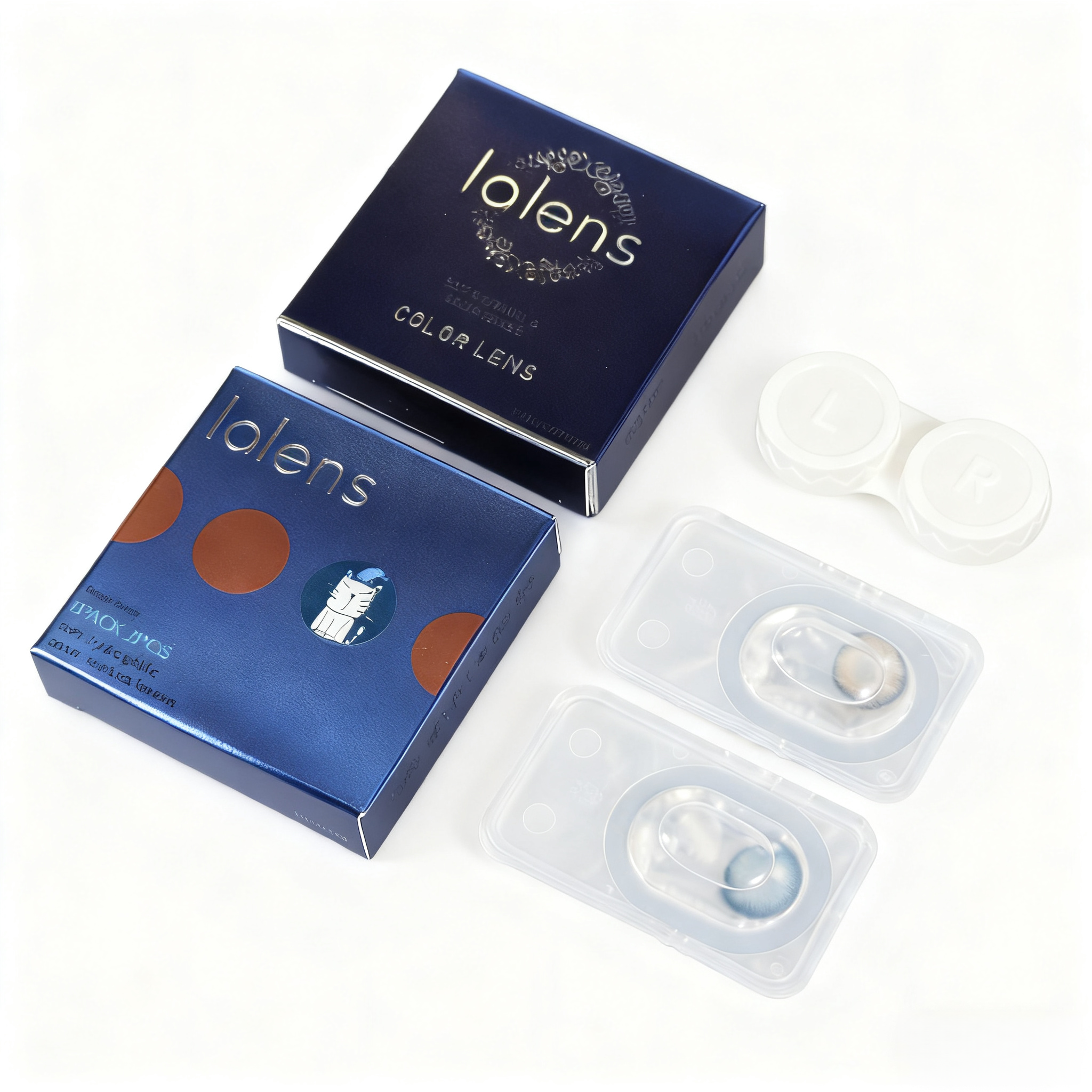
Custom Design Cardboard Soft Contact Lenses Packaging Paper Box
View Specifications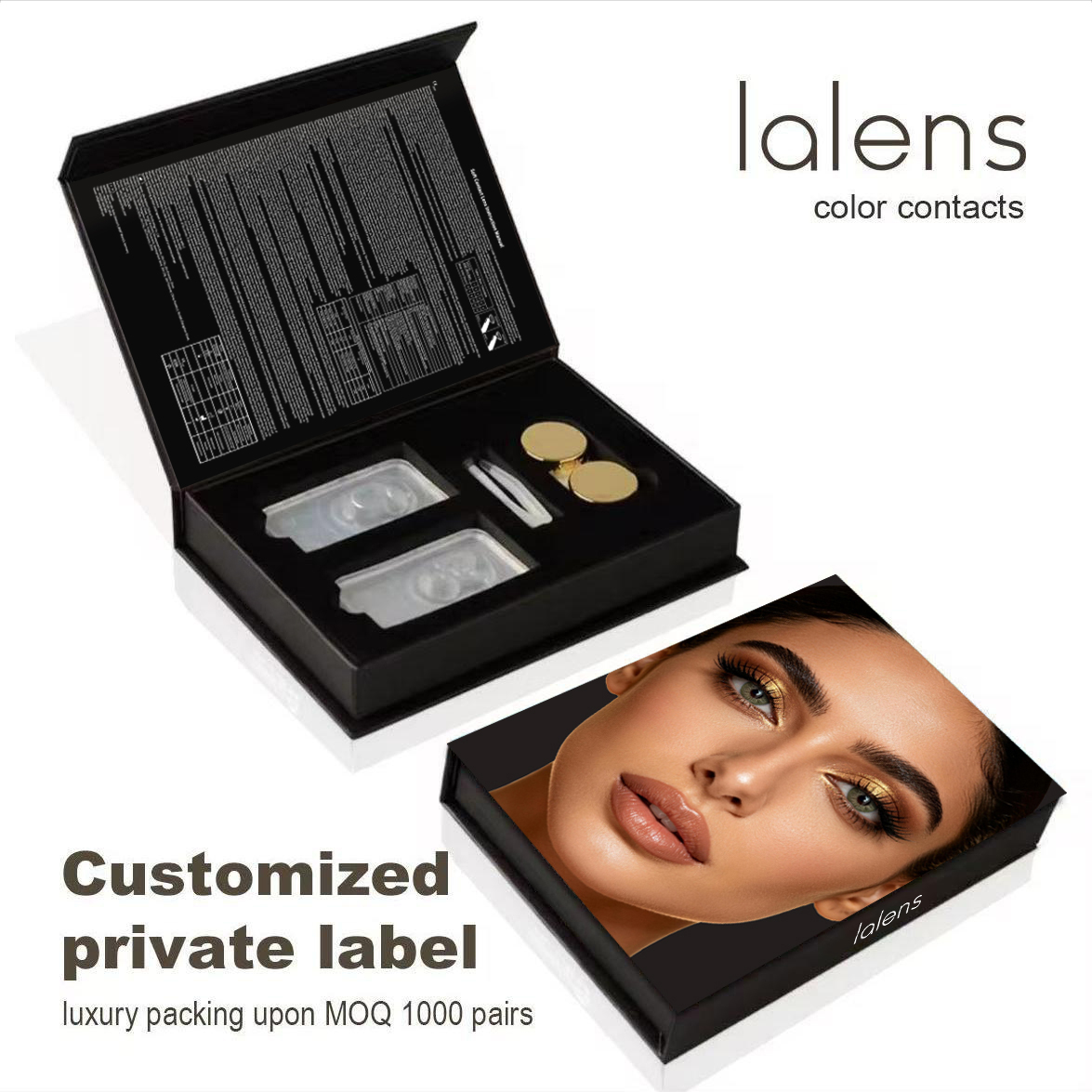
Why Top Global Brands Partner with Lalens Factory
Circle lenses (limbal ring decorative contact lenses) sit directly upon the cornea, meaning optical performance, biocompatibility, and pigment stabilization are non-negotiable medical engineering requisites.
In modern optometric aesthetics, sourcing decorative circle lenses is no longer merely a cosmetic accessory procurement decision; it is a clinical-grade supply chain engagement governed by strict medical device legislation. Shenzhen Lalens Co., Ltd operates as a dedicated OEM/ODM manufacturer with 16 years of continuous production heritage, engineering over 500+ proprietary iris matrix patterns for leading optical distributors across North America, the European Union, Australia, and the Asia-Pacific region. Unlike non-manufacturing trading vendors who drop-ship unregulated stock, our vertically integrated plant houses full cast-molding automated cells, high-precision lathe-tooling labs, class 100,000 cleanrooms, and automated physical-chemical inspection stations.
Pigment-Lock Sandwiching
Micro-encapsulation isolates organic FDA/CE approved bio-pigments safely between dual hydrogel layers. Color matrices never contact corneal epithelial tissue directly, completely preventing pigment bleeding and mechanical abrasion.
High Oxygen Transmissibility
Engineered using optimized HEMA-NVP and advanced Silicone Hydrogel formulations delivering stable Dk/t ratings. Corneas receive unrestricted atmospheric oxygenation, preventing end-of-day neovascularization and hypoxia during extended cosmetic wear.
ISO 13485 & GMP Cleanrooms
Production adheres strictly to ISO 13485:2016 and Medical Device GMP Class 100,000 environmental monitoring. Automated optical inspection (AOI) scans 100% of finished lenses for edge burrs, center thickness, and concentric power fidelity.
Turnkey OEM Private Label
Complete branding ecosystems from sterile PP blister thermoforming, ultrasonic foil lidding, and sterile glass vials to multi-language FDA/EU MDR packaging boxes with GTIN barcodes, serialized lot codes, and IFU package inserts.
Circle Lens Manufacturing Architecture & Specifications
A comparative evaluation of modern Cast Molding against traditional Lathe-Cutting methodologies in high-volume decorative lens mass production.
| Evaluation Parameter | Full Cast Molding (Our Core Factory Standard) | Spin-Casting Hybrid | Traditional Lathe-Cutting |
|---|---|---|---|
| Surface Smoothness (RMS) | < 5 nm (Ultra-smooth optical mold finish) | 12 - 25 nm (Moderate waviness) | 45 - 80 nm (Micro-tooling ridges visible) |
| Pigment Encapsulation | True Polymer Sandwiching (0% pigment exposure) | Surface Pad-Printing with UV Overcoat | Surface Stamping (High abrasion risk) |
| Diameter (DIA) Tolerance | ± 0.05 mm (Strict 14.0 mm – 14.8 mm range) | ± 0.15 mm | ± 0.20 mm |
| Base Curve (BC) Stability | Uniform 8.5 – 8.7 mm (Zero batch distortion) | Variable hydration warping | Manual operator variance |
| Daily / Monthly / Yearly Modalities | Full capability (1-Day, 1-Month, 6-Month, 1-Year) | Limited to Monthly / Quarterly | Predominantly Yearly thick profiles |
| Regulatory Approval Path | US FDA 510(k), EU MDR Class IIa, NMPA Class III | Regional certifications only | Difficult EU MDR re-certification |
Circle Lens Technology & B2B Procurement Trends (2025–2030)
Critical strategic shifts in polymer chemistry, photoprotective ocular coatings, regulatory vigilance, and supply-chain nearshoring shaping brand profitability.
1. The Silicone Hydrogel (SiHy) Paradigm Shift
Historically, circle lenses were manufactured strictly from 2-HEMA polymers exhibiting limited oxygen permeability (Dk ~ 8.5 to 10.5). Global clinical demand is now forcefully accelerating toward third-generation fluorosilicone hydrogels with Dk/t values exceeding 80–120. This shift unlocks legitimate extended daily wear times without causing hypoxia-induced limbal hyperemia, elevating circle lenses from occasional costume novelties into high-frequency daily lifestyle essentials.
2. Bio-Integrated Micro-Dot Photolithography
Next-generation purchasers demand hyper-natural iris biomimicry. Legacy two-tone flat printing is becoming obsolete, replaced by high-density, multi-layer stochastic dot-matrix printing running at resolutions over 2400 DPI. By blending 3 to 4 distinct chromatic micro-layers with gradient feathered limbal bands, modern circle lenses seamlessly blend with natural dark Asian, deep brown, or light European irises without harsh artificial borders.
3. Integrated UV400 & HEV Blue-Light Filtration
Consumers now view cosmetic lenses through a holistic health lens. Progressive B2B buyers are formulating OEM specifications to include Class 1 UV blocking (>90% UVA, >99% UVB) alongside selective High Energy Visible (HEV) 415–455 nm blue-light filtration monomer additives. This value-added barrier protects macular structures from digital fatigue and atmospheric solar stress, commanding retail price premiums of 25% to 40%.
4. Single-Day (Daily Disposable) Dominance
While yearly conventional vials retain steady market presence in emerging cosmetic sectors due to economic pricing, tier-one markets (USA, Japan, UK, South Korea) are experiencing a wholesale rotation toward 1-Day daily disposable blister packs. Daily modalities mitigate compliance risks related to lens cases, disinfecting solutions, and acanthamoeba contamination, driving recurrent 30-pack subscription revenue models for D2C e-commerce brands.
5. Strict Global Regulatory Harmonization
Global regulatory agencies have closed loopholes regarding decorative or zero-power (plano) cosmetic contact lenses. Under US FDA regulations (21 CFR 886.5925), decorative circle lenses are explicitly classified as Class II prescription medical devices. Sourcing strategies now require full factory traceability dossiers, biocompatibility testing (ISO 10993 cytotoxicity, ocular irritation), and active ISO 13485 audit histories to prevent port-of-entry custom seizures.
6. Agile Private Label Sourcing & Modular MOQ
Fast-fashion cosmetic cycles driven by short-form video algorithms (TikTok, Instagram Reels) necessitate agile procurement. Top manufacturers now offer hybrid SKU allocation: maintaining pre-sterilized core base stock ready for dynamic secondary private-label packaging within 7–12 business days, enabling brand owners to test viral trend colors before committing to 50,000-unit contract commitments.
From Concept Art to Certified Sterile Delivery
Our five-stage contract manufacturing workflow guarantees color stability, dioptric precision, and total regulatory traceability.
Pattern Calibration
Select from 500+ stock formulas or engineer exclusive CMYK micro-dot patterns with customized pupil aperture and limbal fade zones.
High-Precision Molding
Cast-molding using ultra-polished optical quartz inserts to ensure repeatable base curves (8.6mm) and exact center thicknesses.
Polymerization & Wash
UV-thermal copolymerization locks pigments inside the hydrogel matrix, followed by extensive extraction baths to eliminate residual monomers.
100% Optical AOI & Seal
Automated machine vision inspects for edge tears, micro-bubbles, and color shift before sealing in pharmaceutical PP blister packs or glass vials.
Terminal Autoclave & Release
121°C pressurized steam terminal sterilization achieves Sterility Assurance Level (SAL) 10⁻⁶ with bioburden testing and full COA release.
Frequently Asked Questions for B2B Circle Lens Importers
In-depth answers addressing regulatory certification, minimum order quantities, private label packaging options, and quality control.
Are cosmetic circle lenses legally classified as medical devices in the United States and EU?
+
Yes, unequivocally. Under United States federal law (21 CFR 886.5925) administered by the US FDA, all decorative, colored, novelty, and circle contact lenses—including zero-power plano lenses—are strictly categorized as Class II Prescription Medical Devices. Retailers and distributors operating in the US must adhere to the FTC Contact Lens Rule, which mandates prescription verification prior to dispensing. In the European Union, lenses fall under Regulation (EU) 2017/745 (MDR) Annex XVI, which specifically regulates aesthetic non-corrective contact lenses under the same rigorous clinical safety standards as prescription optical lenses. Lalens Factory provides verified importers with complete Technical Master Files (TDF), biocompatibility reports (ISO 10993), sterilization validation (ISO 11137/ISO 17665), and standardized English packaging compliant with UDI, GTIN, and symbol requirements.
What are the minimum order quantities (MOQ) for stock wholesale vs. custom OEM private label runs?
+
We maintain an agile, tiered manufacturing structure to support both startup niche brands and multinational retail distributors:
- In-Stock Patterns (Lalens Catalog): Low minimums starting at only 50 to 100 pairs per SKU/color in standard blister or vial packaging, ready to ship via express courier (DHL, FedEx, UPS) within 3 to 7 business days.
- Semi-Custom Private Label: Utilizing our certified lens formulations and 500+ proven patterns with your custom-designed outer boxes, barcode labels, and brand identity manuals starts at 500 to 1,000 pairs total.
- Fully Customized Pattern & Formula (Bespoke OEM/ODM): Developing proprietary iris films, exclusive diameter/base curve configurations, and customized secondary packaging runs requires an MOQ of 5,000 to 10,000 pairs per design due to photolithographic tooling and mold development costs.
How does Lalens Factory ensure batch-to-batch color consistency across multi-thousand reorders?
+
Color variation between batches is the single largest reason cosmetic brands lose customer retention. Lalens Factory solves this through our Triple-Lock Color Fidelity System: First, our raw organic bio-pigments are synthesized in computerized spectrophotometer-controlled batches to prevent pigment delta shifts. Second, printing plates use precision laser-etched ceramic micro-wells ensuring identical ink deposition volumes. Third, every newly polymerized production batch is evaluated under calibrated D65 standard daylight booths against golden master control samples. Batches exhibiting a Delta-E (ΔE) color deviation greater than 0.8 are automatically rejected before final packaging.
What power ranges (diopters), diameters, and base curves can your factory produce?
+
Our cast-molding and lathe-machining facilities support an exhaustive range of optical and cosmetic specifications:
- Sphere Diopter Powers: Plano (0.00) for purely cosmetic use; corrective myopia powers from -0.50D to -6.00D in precise 0.25D increments; and -6.50D to -10.00D in 0.50D increments. Custom hyperopia (plus powers) can be manufactured upon special contract.
- Total Diameters (DIA): Standard natural profiles at 14.0 mm and 14.2 mm; standard enlarging circle lens profiles at 14.5 mm; and high-impact dramatic doll/cosplay profiles up to 14.8 mm.
- Base Curves (BC): Universal fit parameters of 8.5 mm, 8.6 mm, and 8.7 mm, mathematically designed to provide optimal corneal sagittal alignment for over 95% of human ocular profiles.
- Water Content: Formulations ranging from 38% (low water, ideal for dry eyes and annual stability) to 42% (balanced monthly) up to 55% (high-hydration daily disposables).
What is the difference between sterile glass vial packaging and PP blister packaging?
+
Both packaging formats provide absolute hermetic seals and maintain sterile barrier integrity for up to 5 years, but serve different market segments. Glass Vials (crimped with medical-grade aluminum flip-off caps and butyl rubber stoppers) represent the classic presentation for yearly and semi-annual replacement lenses, highly favored in traditional cosmetic clinics and Asian beauty distribution due to their robust aesthetic durability. Polypropylene (PP) Blister Packs (thermoformed plastic tubs sealed with multi-layer printed aluminum foil) represent the modern pharmaceutical standard for daily and monthly disposable modalities. Blister packs offer significantly lighter freight weight, 100% recyclability, ease of consumer opening without cap-removal tools, and seamless automated compatibility with multi-pack secondary folding cartons.
What documentation and sample support is provided prior to signing high-volume contracts?
+
We believe in total transparency and clinical rigor. Prior to contract execution, prospective wholesale buyers and optical partners receive a formal OEM Evaluation Kit comprising: physical wear-test samples in desired powers/colors, Certificates of Analysis (COA) for identical lots, accelerated aging and real-time shelf-life data reports, ISO 13485:2016 certificate verification copies, CE declaration of conformity, and comprehensive material safety data sheets (MSDS). For brands developing proprietary custom packaging, our structural engineering team supplies digital die-lines, foil stamping specifications, and complete regulatory labeling guidance.
Launch Your Certified Private Label Circle Lens Line Today
Connect directly with Shenzhen Lalens Co., Ltd's senior optical engineering and OEM account managers. Receive full pattern catalogs, technical compliance dossiers, and wholesale pricing tiers within 2 business hours.